
Where Wisdom Waits


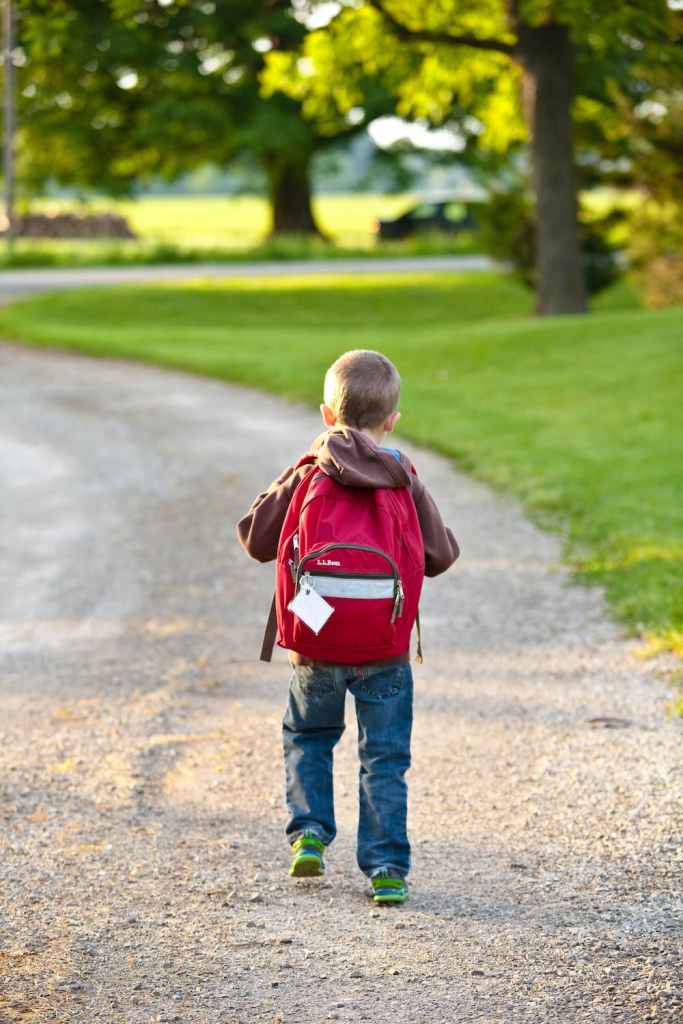
Seeing hundreds of photos of local children returning to school last week, I could not help but recall teachers who impacted my own life.

Some taught students effectively due to high doses of both energy and engagement.

Others were dedicated to their particular subject and taught with a contagious intensity.

As I grew older, I came to see the power of a teacher who not only could provide correct information but who could push students to ask deeper questions. Knowledge of the correct information is key, but sharing that information in a way that causes students think more fully is a mark of our wisest teachers.

While knowledge and wisdom are at times parallel and often intertwine, the ability to apply what we know to how we live ultimately passes beyond “just the facts” and into the realm of true wisdom.

Knowledge tells us what we have in front of us, but wisdom helps us decide how to live faithfully with whatever we have.

Scripture reveals that true wisdom comes from God. We are reminded that if we lack wisdom, we should ask, and God will give it generously (James 1:5).

Often in life, we become frustrated as if attempting to put together an elaborate toy or piece of furniture. It looks simple enough, and so we race ahead soon finding ourselves lost in the complex assembly. If we keep at this task long enough, we realize (or perhaps are told by an onlooker) that we should have read the directions first.

Spiritually, we often do the same.

Rather than seeking to know God’s will and asking for the wisdom to live each day, we rush ahead and only ask for help once the trouble hits. Such an attitude may seem like independence, but our repeated refusals to ask for help only further prove our lack of godly wisdom and genuine humility.

The Bible also teaches that wisdom comes not only directly from God but from the counsel of others who have faced the trials of life before us. A foolish person believes he is the first person to ever face his particular problem, but a wise person seeks out the advice of others (Prov 12:15).

A lot of us want to go our own way and to do things according to our own understanding. In some areas of life such confidence can be a blessing, but we are foolish if we allow self-confidence to prevent us from seeking out the wisdom others have gained through time and experience.

Wisdom understands that learning from others shows strength rather than weakness.

A person without wisdom is a great waster of time.

This individual sees the future either as too immediate to change or too far away to be concerned about.

When God’s Word tells us to walk in wisdom, one aspect of a such a life is “redeeming the time” (Eph 5:15-17). One who possesses wisdom understands that time is precious and will seek to make the most of each moment.

Knowledge can give us the facts we need to act, but wisdom tells us when action is needed and what action is best.

Knowledge can be sought, processed, and quantified while wisdom is received through prayer, discerned through conversations, and demonstrated through faithful actions.

May we come to appreciate how much we need not only to know the right answers, but to ask better questions and to faithfully apply godly wisdom to our lives.

“For What Is Your Life?”


In speaking of the brevity of life, James 4:14 offers this insight,

“For what is your life? It is even a vapor that appears for a little time and then vanishes away.”

Few of us who have lived long in this life would deny this truth.

One day we are nervous about our first day of school and the next we are watching our own grandchildren walk across the stage at their graduations.

Despite knowing that even the longest life is brief, we often live an unexamined life under the impression that we will have more time.

While we cannot know the exact length of our days or the challenges they will bring, we can and should choose the mindset we embrace as we move through our lives.

When looking at the issues facing our world, some will choose to live a constantly critical life.

There is certainly much wrong in our world- destructive weather and tragic accidents, crime and violence, corruption and injustice, disease and spiritual darkness.

All of us who are paying attention see these challenges and these hardships, but we consider the many bad situations side-by-side with the good that exists around us.

The one who chooses the critical life ends up actually wanting to be cynical and bitter so the truth of his own judgment proves true- and he comes to discount any aspect of reality that would prove there is good left and hope alive.

To paraphrase the folk song, this person sees what he wants to see and disregards the rest.

Such a critical life not formed in a moment, but by many small negatives that compound over time.

Not everyone will choose this cynical criticism, but many of us will choose to lead highly compartmentalized lives.

In order survive in an often harsh world, we divide our larger lives into smaller sections and parts that, at least in theory, can be managed more easily.

We may have “work life,” “family life,” “school life,” “church life,” and so on. We come to think we can keep these areas of life from overlapping too much, and we approach each day with the idea of divide and conquer.

We often come to realize that while this compartmentalization may be efficient for a season, it becomes an unfulfilling and often conflicted way to live.

We may do a lot, but nothing is done fully or well.

If our compartments conflict, we end up living with more self-created tension and anxiety.

Amid those who are critical of others or so compartmentalized that they struggle to be genuine, there are those who will choose a committed, Christ-centered life.

Both the commitment and the focus on Christ are vital to those who take this path.

On the surface, a committed life of any kind may sound positive, but it is only better if our guiding commitments are set upon the right things.

Being Christ-centered is essential, but we must be centered in Him and committed to Jesus over the course of time- not just in the excited enthusiasm that often accompanies conversion.

To be both committed and Christ-centered will form the lasting components that shape a faithful life.

Life is brief, and yet the life we choose shapes not only our own souls but impacts the many lives that intersect our own.

We cannot know what will befall us or how soon our vapor will vanish, but we can commit and center our days in the One who not only knows our paths but values our lives far more than we can ever fully understand.

Back to School Prayer

Lord, we give thanks for the blessing of change.

So often we resist those moments that throw us out of our rhythms and disrupt our self-focused schedules, and yet in this time of new things, we offer thanks.

We give You the glory for this rapidly-passing season of summer and the growth it has brought to our lives.

We give You praise for the children entrusted into our care and ask Your blessings on them as they return to school.

Education seeks to equip us not only to think but to feel and to be placed in situations that cause us to see and relate to the different experiences of others. Help our kids, and us, to learn what You seek to teach.

There are so many steps along the journey, and we implore safety, protection, and strength for our students and those that serve them.

For the kindergartener entering their classroom for the first time, we offer prayers for courage and confidence as they embrace new challenges and make new friends.

For the elementary school age child, we seek a blessing of calm and comfort- may our anxieties about our children not be placed too soon upon such small shoulders.

Help us, Lord, to realize that our children are hearing what we say and seeing what we share, and even a passing comment can cause harm.

Help us be better grown-ups.

Bless the middle schoolers who are passing through a period of great change in their young lives. Give us as adults the ability to model concern and compassion and to truly notice what is being shared (and left unshared) by our children each day.

Grant us grace with the teenagers in our lives. Help us to offer encouragement more than we pass judgment. Allow us the ability to perceive many of their mistakes and missteps as issues of maturity, and yet grant us the wisdom needed to patiently offer correction that encourages growth rather than resentment and further rebellion.

We pray too for those young people moving away- for college, vocational training, or military service. We offer a blessing on those now entering the workforce rather than a classroom for the first time in many years. Guide and guard them in these early experiences of their working life.

Bless the parents, grandparents, and extended family members who desire both a safe environment and a quality education for their students.

Help us all to see one another as instruments of grace as we work to build up the young people we love.

We lift up our teachers- the living avenues of learning in our community.

We pray for their strength and their patience both in reaching their students and in bearing up under the increasing weight of scrutiny that accompanies their daily work. We pray for the many administrators, coaches, counselors, bus drivers, cafeteria staff, maintenance crews, school resource officers, and volunteers who will impact our students and leave impressions in the year to come.

May their hearts seek the good of each student, and may we as a community support those who embrace these special roles.

Lord, as people, we often fear the unknown.

We cannot see the future for ourselves- much less the future for a child just beginning life’s journey.

We ask that You reveal to us ways to bless the children You have placed to our care.

Give us the humility to serve, the courage to advocate, and the grace to extend forgiveness as we journey through the coming school year together.

We ask these blessings in the name of the One who loves us all as His own dear children, amen.

Distractions I Love

Photo by Ben White on Unsplash

If you use social media, you have likely seen several different versions of this type of article.
My hope is it will serve as a reminder to all of us and a simple encouragement to share with young parents who may need it this week.


Once again, you are sitting in worship, and your child is restless.

Perhaps even moving around and getting noisy. You try to calm them down, and things only seem to get louder. You try to pacify them with a small snack, toy, or whispered encouragement, and nothing works. You wrestle with them, and debate whether to wait out the moment or take them outside.

You feel like you are distraction either way.

All the while, you are a little embarrassed, and maybe a little frustrated too. You look around and seem like the only one fighting this fight. You might even think to yourself, “There’s not much point in coming to worship. I can’t focus on the service because I am constantly caring for my kid(s), and I know we are distracting others. What’s the use?”

I humbly suggest you take another look around.

The widow over there quietly gives thanks at the sight of you wrestling with your little one. She was once where you are once, and she knows how hard it can be. Oh, she remembers, but she smiles because to hear small children and see young parents here brightens her day. She received some discouraging test results this week, but even without that recent blow, time tells her that her race of faith is nearing its end. Overhearing the loudly-whispered questions of your little one takes her back to her own youth, her friends, and their families, all gone now, who once shared this sacred space.

That older man who always seems to be a bit grouchy sees you too. He’s always going on about how young people these days have no respect or sense of respect. The world is bad and getting worse is the message repeated each night on the news, but he sees your young family in worship each week, and he can tell how hard you work to be there. He knows something about hard work and hard times. Whether or not he can admit it, seeing (and hearing) your noisy kids gives him a little hope that maybe world isn’t doomed after all. No one would call him an expert on church trends, but even he knows it would be far easier to stay home or head to the lake or the ballpark after a hard week.

The preacher who may look tired and frustrated is not wearied by your presence but because he spent his Saturday night sitting up with a sick church member at the hospital, sharing an infrequent evening with just his own family, or waking early a few hours ago to pray for God to bless today’s lesson. His fatigue is not from your kids- in fact, their presence is a treasured reminder that God is still working in this place.

Keep on bringing your children to worship. As hard as it might be at times when half-asleep and worn down from the week, keep that connection strong. You are an encouragement to so many, and you are placing your children upon a strong foundation.

Whatever we make time for in life is seen as a default priority.

If we set the priority of attending worship as a family when our kids are small, it is far more likely to be second nature for our children as they grow older, make their own choices, and face even more distractions.

For the rest of us, young parents and their kids who are making the effort to be present should never be seen as distractions.

Their commitment is essential- not only to the future but to the present life and impact of every church family.

“It’s just so unfair!”

“We just want things to be fair for everybody.”

How many times have we heard a parent, teacher, coach, or politician express the idea that fairness in life is not only desirable, but an achievable goal in a given situation?

Certainly, if we are talking about people having an opportunity to succeed or a chance to follow their dreams, fairness may be an ideal to strive toward. Day to day, however, we quickly realize that challenges- some we actively cause and many we do not- impact access to opportunities and create an uneven path to fairness in many areas of life.

In the midst of our world’s clamor to be fair, Christians are called to be grace-filled, forgiving, and compassionate.

Often when those around us demanding things should “just be fair” are actually seeking advantage for themselves, but believers are reminded that success for the Christian is not defined in terms of worldly status but in faithfulness to Christ. As we live in a world focused on gaining more and promoting the fear driven by perceived scarcity, disciples are to live a life that is open-handed and gracious to all.

This attitude of grace is not formed from our natural inclinations or under the influence of our dominant culture. Grace toward others can only be truly extended by those who have experienced God’s grace in their own lives.

Believers know the world is not fair- and we should be extremely thankful for it.

Because of Christ’s gracious gift, we are relieved of the massive burden of our sin. The Person who was not responsible for the world’s brokenness comes to us in lovingkindness and takes our hurts and harm upon Himself. If life was fair, the Bible (and humanity itself) would end in Genesis 3 with the first sin, but because of God’s unfair grace, we are given another opportunity to start again. This scenario of sin, hurt, grace, and hope repeats across the millennia of Scripture as well as in our own lives each day.

We should not long for fairness from God- in the light of His perfection, who could honestly claim we want what we deserve?

It is so hard to admit mistakes and confess our inability to sort out our lives in our own strength.

As we feel that we are beginning to grow in grace, the frustrations of life seem to rise in response. God’s grace is abounding, but so often we limit our own ability to share in this abundance. Rather than freely sharing in the divine bounty that is available, we focus instead on defining the terms of grace and building borders around God’s intended blessings.

We often give the impression that if God’s grace gets out of control, the lack of boundaries will cheapen our own bond with Him.

Until we come to acknowledge and appreciate God’s grace toward us, we will continue to struggle to share His love to those who need it most.

Ultimately, I must resolve to let God be God and to accept both His love for me and to appreciate His grace toward others.

We are to be ambassadors for Christ and ministers of reconciliation rather than gatekeepers of grace.

The message of the gospel is that we receive God’s grace we could never earn rather than the wage of death that our sin deserves.

Through Christ, all people are offered the opportunity to share in the riches of grace- it is not fair, but it truly is good news.

Intentional Practices in Distraction

We often find ourselves in seasons of distraction.

While we may be moving rapidly through full, busy days, we find our actual focus dulled by the summer heat, numerous activities, major health challenges, or unending preparations for upcoming events.

Distraction becomes a subtle destroyer- we may still get everything done, but little is done well or enjoyed fully as we take on more and more.

Even if we recognize this problem, we often do not want to burden others with our challenges, and because of this social silence, we tend to think we are the only ones distressed by the busy pace. In our desire to avoid awkwardness, we actually create more opportunities for our distress to grow and potentially lead to lasting spiritual harm.

Unless we acknowledge the challenge, we cannot employ intentional practices to overcome the fatigue and frustration created by our distractions.

In distracted seasons, we need to recenter our lives with intentional prayer.

In overwhelming busyness, it is difficult to take time to truly pray. The idea of setting aside time to pray in the midst of an already hectic life seems counterintuitive.

“Why pray when I could be doing?” “Rather than a certain time, can’t I just pray as I move through my busy day?” “Isn’t spontaneous prayer really more heart-felt anyway?”

While we can pray at any time in any place, Scripture reveals that some spiritual victories come only in response to a disciplined life (Mt 17:19-21). It is Satan’s design to disconnect us from God, our Source of spiritual strength.

As the saying goes, if the devil cannot make us bad, he will make us busy.

When we move to pray, we are taking a step toward returning our relationship with God to the center of our lives.

It is in life’s most hectic times when we feel least like praying that we often most need to pray.

We keep track of the most important appointments/events in our lives. We mark down what we do not want to miss- doctors’ appointments, weddings, reunions, recitals, concerts, and ballgames. It is not that we would always forget, but that we want to be certain to prioritize the most important things and set that time apart. What could be more important than a daily appointment with the Lord that we prepare for and commit to keeping amid the busyness of life?

A set time of prayer need not be seen as a surrender to legalism, but simply a personal discipline that seeks to shape our busy days with more time purposefully spent with God.

Along with prayer, we need to reengage in intentional fellowship with others.

While a restored connection to God through prayer is essential, we also need the support of other believers as we seek to establish balance and boundaries in our lives.

As human beings, we are created for life in community- both socially and spiritually.

In times when our own fire is dimmed and dying out, we can draw warmth and light from the believers gathered around us. We may feel like we are the only ones struggling, but when we give voice to our fears, we find others too are overwhelmed by life’s hardships. Such honesty serves as a gateway to the strength that comes only when fellow disciples join together to listen, pray, and bear one another’s burdens.

In Christ, we have access to our Heavenly Father and the comfort of the Spirit throughout our lives- even in seasons of increased busyness and distraction.

In the face of life’s distractions, we can choose to embrace the practices of intentional prayer and active fellowship in order to refocus on God and draw strength from the enduring bond we share in Christ.

Summertime Prayer

In this change of season, Lord, we ask also for a change of heart.

Take our reservoirs of defensiveness and self-preservation, and let these stored energies be transformed into streams of kindness and compassion.

Lord, in a culture that tells us to demand more and more, allow us to find satisfaction with less and less.

Grant us the awareness and humility to see when our hearts are being pulled away from the center of who we are called to be in Christ.

Open our eyes that we might see ourselves more clearly, and in the realization of our weakness, return to You and Your strength.

May a better sense of our own limitations cause us to experience a growing grace toward our neighbors.

Clarify our desires- help us to recognize the dangers that arise from settling for passing entertainment and distraction when we actually long for purpose and meaning.

Restore within us the wonder and joy of seeing holy things.

Give us the child-like awe of watching bubbles spiraling upward, spying rainbows emerging from the midst of summer storms, and tasting Sno-cone sweetness running down our chins on a hot July day.

Help us to love this creation that You have given us to enjoy- open our eyes that we might take less for granted and give praise for more and more of life’s pleasures.

Draw us to constant celebration of the goodness of Your very good world in each aspect of our lives.

Open our souls to be filled to overflowing with appreciation and wonder.

Let the beauty of Your gifts, as well as the truth of Your Word, draw us back to You through all our days.

Overwhelm us with Your ever-renewing kindness and compassion.

May our hearts, broken by the hardships of life, be refreshed by the awareness that You are with us and continually strengthen us.

Implant within us a greater desire and growing commitment to walk according to the Spirit and not according to the flesh.

Help us to see that we cannot stand in our own power nor survive in our own strength.

Cause us to admit that we cannot thrive without Your presence and the fellowship of Your people.

Draw us away from our individualistic pursuits of power and recognition that we might form together the community of faith You long to inhabit and empower to live out Your mission in our world.

Let our dreams of Your kingdom be so deep and broad that they are doomed to fail without Your approving participation and our mutual cooperation.

Help us to faithfully see ourselves, both strengths and weaknesses, and to yield all for Your glory and the good of Your kingdom.

In all things, may we be drawn together as we are drawn more and more to Jesus.

In His holy and awesome name, we pray, amen.

Battling Bird Vision

Our house resounded with a peculiar thud throughout the day.

The newly-resident bluebirds had begun to announce their presence by repeatedly slamming into our large glass windows.

While millions of birds die each year in the United States by accidentally flying into high-rise buildings, the springtime phenomena we experienced is more complex- the vigilant bird sees its own reflection in the glass, perceives its image to be a rival, and attempts to drive away the interloper- all the while, the bird is actually attacking its own mirrored self.

While birds do not have the ability to tell a genuine enemy from their own reflection, people are often guilty of similar confusion.

When we cannot see ourselves truly, we tend to respond with aggression toward any and all perceived threats- never realizing that our perception, rather than reality, is often the actual adversary.

Such a distorted mindset creates a spiritual haze over our lives. What do we miss when we embrace this limited, bird-like-blindness approach to life?

One great danger to our vision is forgetting that our identity is to flow from who we are in Christ. In Jesus, our identity is more fully realized by seeking to live out the faith we claim. Scripture notes that to look into God’s Word for wisdom and then to immediately return unchanged to our old lives makes us like a man who looks in a mirror, turns away, and immediately forgets his appearance (James 1). Instead, we are to look at Christ and then look inward adapting our lives to His image. As disciples, we must die to self-focus and allow a faithful reflection of Christ to be seen in us (Gal 2:20).

Beyond a spiritual identity crisis, we can also find ourselves moving through our days without a clear purpose. Drawing on the imagery of ancient Greek sports, Paul speaks of the danger of not having a goal as we go through life (1 Cor 9). Like an undisciplined athlete, the believer who does not align his life with the ultimate goal of growing in Christ will fail to develop either spiritual strength or skill- like an ineffective boxer jabbing wildly into the air.

Adding more activity is no guarantee of progress, yet intentionally growing in focused disciplines can us help to clarify our goals, prevent wasted energy, and move forward.

Once we recognize ourselves and our goals, we must avoid the mistake of failing to finish strong.

In his last letter, Paul signs off with words that draw a contrast between Demas and Mark. Paul’s former coworker Demas has forsaken him while Mark, who Paul initially doubted, has proven himself a valuable minister (2 Tim 4).

Paul notes his own calling, and the fact he has been faithful to the end. If not focused on finishing well, we risk leaving a life of faithfulness behind to chase the distractions of the present world.

Far too often when encountered with life’s busy seasons, our hearts begin to drift.

Not recognizing this tendency in ourselves, we can end up disoriented and step away from our solid grounding in Christ.

Ultimately, the downfall of our backyard bluebirds results from a terrible illusion- they fear an outward enemy when the real danger is the self-inflicted harm arising from their aggressive, disoriented state.

Sadly, this distorted experience often marks the lives of believers- we fear persecution when our own distractions and disillusionment are almost always greater dangers.

May God grant us the grace to see ourselves clearly, to focus our faith, and to claim the reality of our connection to Christ as the basis of our hope.

Come aside and rest awhile…

On reaching another birthday, I am realizing my physical resilience is not what it was years ago. Two decades ago, as a young minister, I could get up early, stay up late, and do a lot in between with seemingly little physical cost. While we often experience decreasing physical energy as we age, spiritual fatigue is a more subtle danger facing us in our constantly overscheduled world.

We live in an age of constant rush. Advances in technology have made daily tasks easier/faster, but rather than taking more time to rest and engage with friends and family, we have allowed cultural pressures to convince us to add even more busyness to our lives.

There never seem to be enough hours in the day or days in the week to accomplish all of our plans. We constantly bemoan our lack of time, but in reality, we are often choosing to take on more than is healthy for us- both physically and spiritually.

Those walking through addiction recovery understand that the danger of relapse dramatically increases during times of stress- hunger, loneliness, fatigue, shifting schedules, or relationship crises. Just as acute stress can pose dangers, potential pitfalls abound when we continually chase the idol of busyness.

In our constant pressing forward, we invite damage to our health, our relationships, and ultimately, our connection with God.

Blinded by busyness, we often refuse to heed the warning signs of overwork and overstimulation.

If we do not intentionally seek rest, we will unintentionally break down under the constant strain of our schedules.

This truth is not only a pillar of contemporary self-help books, the importance of rest is a principle deeply rooted in Scripture.

While murder and adultery are condemned in the Ten Commandments, weekly rest is commanded (Exodus 20:8-11). This detailed idea of Sabbath as a day of rest looks far different than most of the weekend rituals we practice today.

On the very day God’s Old Testament people were told to abstain from all work, modern believers often attempt to frantically jam more activity into the end of our week.

On Sunday when the New Testament saints gathered for longer periods worship (Acts 20:7), we often rush through our worship (or skip it entirely) in order to pack in baby showers, bridal teas, ball practices, family visits, grocery shopping, and preparations for the upcoming week.

The concept of the “Sunday scaries,” the idea that the anticipation of the coming week’s overwhelming busyness invades our day of rest and overwhelms our peace of mind, is a reality for many today.

Surrounded by our culture of hustle, we each must find ways to rest- even as we live in the midst of such external busyness. This need for grounding calm in a chaotic world is nothing new for believers.

In the midst of trauma and unrest, David strengthened himself in God (1 Sam 23:16). In the midst of persecution and physical danger, God provided sleep and food for Elijah (1 Kgs 19:4-7).

In the gospels, Jesus withdrew and prayed alone with His Father- both as a regular practice (Lk 5:16) and at especially critical moments (Lk 6:12-13). In the midst of a period of exceedingly fruitful ministry that proved overwhelming to the disciples, Jesus invited them to pull back, regroup, and rest (Mk 6:31).

If Moses, David, Elijah, Peter, and even Jesus needed times of rest and renewal, we are foolish to think we can just keep running at full speed without disastrous consequences.

Mature believers must come to recognize the self-deception we embrace whenever we trust our own strength and proceed to pile on more and more busyness wearing ourselves thin with constant activity.

Whenever human ability alone is trusted as the source of spiritual strength, failure is certain.

We must be willing to set our minds on the things of the Spirit (Rom 8:6), and then intentionally seek the rest and renewal that can only come through time spent in God’s presence.

Why Memorials Still Matter

As Memorial Day arrives this weekend, we remember the sacrifices made by those who have given their lives in service to our country.

Different than Veterans Day or the Fourth of July, Memorial Day is intentionally set aside as a day to remember those who “gave the last full measure of devotion” to uphold our freedoms.

It is ironic that a day intended to provide a national pause for reflection is often seen by many as the kickoff to the increased busyness of the summer season.

While not the first society to set aside times of remembrance, we are living in a time and culture which deeply needs memorial pauses in the midst of our hectic lives.

Scripture is full of memorials and monuments that were recognized and celebrated by God’s people. These holidays/places were established both so that the people could remember the great moments in their shared history and so they could use those memories as a means to teach the next generation.

Scripture speaks about both times for remembrance (Passover; Purim) as well as special places dedicated as memorials. Abraham’s one land purchase in Canaan was a dedicated burial ground. In later centuries, the tabernacle/temple centered the holidays and sacrifices around a visible reminder of God’s presence. While these holy places were expensively furnished and elaborately decorated, most memorials lacked any such finery- their value was tied to an event in the people’s collective memory.

In Joshua 4, God’s people piled up rocks at the Jordan River as they crossed over on dry land. One set of stones was placed in the midst of the riverbed and another on the shore where the people camped after crossing over. Each memorial contained a symbolic number of stones (12) and was given with the specific purpose of providing a prompt for witnesses as they recounted the miracle to their children.

In a land full of finely-carved idols, these rough stones served to remind the people that their own craftsmanship and skill could provide nothing to compare with the power of the one true God. The stones were to offer an answer from the past to the future question, “what do these stones mean to you?”

In the coming years, the older generation could point at the stones and say, “I will never forget that day- the river was at flood stage and far beyond its banks, but as the priests stepped forward, the LORD stacked up the waters in a heap, and the whole nation, thousands upon thousands of us, walked across on dry land just as our parents had crossed the Red Sea. When we moved forward, the LORD opened the way for us. And, at His word, we gathered up and placed these stones so that we might never, ever forget our deliverance.”

It would be wonderful to say the people of God always took the time to remember and reflect on God’s provision and power, but sadly, neither the Old Testament believers or New Testament saints perfected the ability to keep such memories fresh in their minds.

In each generation, as people forgot the past or commercialized the faith, new voices (such as Elijah, Josiah, John the Baptist) were needed to remind God’s people of the past in order to equip them for the present and prepare them for the future.

We are no different.

In a world that always seems to be moving faster, we need to take the time to pause and to remember.

As God’s people, we need the reminders of past blessing and the strength such memories provide to build up hope in the present.

As we reflect on those who sacrificed for our country in the coming days, may we remember and give thanks. May we likewise remember the blessings experienced in the life of faith, and seek to faithfully pass this legacy forward to the next generation.