People of the Second Chance

I finished an intense memoir by a woman who has struggled with many of the same mental health issues I have faced over the last two decades. One key difference in our stories is that, while she faced rejection from her family, bullying by so-called friends, and came to suffer from eating disorders, self-injury, and drug abuse, I received a stream of constant support.

Even though our medical charts might show a similar chemical starting point, our stories ultimately followed two extremely different paths. I know the intensity of my own pain even with so many advantages, and her candid story reminded me that each person we encounter is struggling with something- and often hiding it quite well for a long, painful time.

Every day we witness people making bad choices or falling into destructive patterns, and we are tempted to say, “They should know better.”

While taking personal responsibility for our actions is essential, we also need to appreciate the circumstances and conditions that have led others to where they find themselves. While accountability is vital, it is naïve to think that we all are starting our lives in the same place with all of the same advantages.

I realize all too well that it is a challenge to continue to offer grace to people who repeatedly make negative choices and break our trust, but I am so thankful for the many people in my own history who chose to give me those second and third chances. I am also grateful that I believe in a God whose active, life-giving grace provides me the ability to start over when I fall short.

While thankful for the day-to-day stability in this season of my life, I hope I never become so settled or so stable or so secure that I forget what it was like to need another chance. People were willing to give them to me when I didn’t deserve them, and I know that I too need to be an agent committed to sharing that same grace.

Each day we all encounter someone we can influence or encourage- someone who stands in need of another chance.

A kind word, a caring hug, or a thoughtful compliment can be such a catalyst in a person’s life. I pray we can all look to be that influence– the provider of the second chance.

Send that text. Mail that card. Make that call.

Understanding just what the person is facing is not possible nor is it really the point– we must simply realize that we don’t have to withhold our love from people until they get it all figured out.

In fact, we come to appreciate that it is in the act of loving people and extending another chance that they often realize the courage to hang on for another day and to begin moving forward.

  • I don’t have to fully understand to love you without condition.
  • I don’t have to fully understand to serve you without selfish motives.
  • I don’t have to fully understand to pray for better days to come.
  • I don’t have to fully understand to make sure you get home safely.
  • I don’t have to fully understand to sit up with you while you cry.
  • I don’t have to fully understand to realize we are all in this together.
  • I don’t have to fully understand to be willing to offer you a second chance.

Life is hard enough as it is, but it proves to be so much harder without support.

No one needs to face this life alone- especially when we each have the ability to make a difference.

May our eyes, ears, and hearts be open to opportunities; not to fix others, but to walk beside the hurting people in our lives and to extend to them the grace others have willingly given us. In seeking to lead with grace, we embrace the renewed life we have in Christ and are strengthened to share it with others.

Search Me, O God…

In our all-too-frequent moments of national crisis, religious leaders often declare that God’s people need to pray BIG prayers.

Prayers that will change our nation. Prayers that will revive our churches. Prayers that will halt gun violence and cure racism. We are told again and again that these are just the type of big, broad, and bold prayers that will bring our sin-sick society back to God.

While there is nothing wrong with offering such prayers for our hurting world, I believe the prayer with the most potential for lasting change is to ask God to truly show us the more personal challenges and compromises that so often rise up within our hearts and displace Him from His rightful place in our lives.

In Psalm 139:23-24, the inspired writer offers the words, “Search me, O God, and know my heart: try me, and know my thoughts: and see if there be any wicked way in me, and lead me in the way everlasting.” (KJV)

This prayer is both expansive and intimate, both personal and daring. In praying these words, we are not asking God to change the world in a instant or to overwhelm our lives with more material abundance- we are instead taking the difficult, yet necessary, step toward a closer walk with God by openly confessing our own limitations and admitting our vulnerability and frailties before His perfect holiness.

It is important to note what is being asked in this two-verse prayer.

When we ask God to search the heart, we are asking for one of the most intimate and intense experiences possible. We know from Scripture that the human heart without God’s presence is “deceitful about all things…desperately wicked” (Jer 17:9). In a world where evil is attributed to various combinations of environment, heredity, chance, social issues, and bad choices, believers realize that there is a spiritual component to the darkness in our world. Such darkness is not only abstractly thriving “out there” in repeated tragedies like mass shootings, ongoing heartaches like the opioid crisis, and broken social systems that promote racial/class/religious divisions, but this spiritual darkness is also present to some degree within each person who inevitably does wrong and sinful things each day.

When Paul says, “all have sinned and fallen short of the glory of God,” he truly means all of us (Rom 3:23).

When we consider the words of Psalm 139, it is essential to observe whose heart we desire God to search and expose. When my neighbor hurts me, I want to know why. When my spouse is unkind, I can dream up all sorts of reasons for the behavior. When someone cuts me off in traffic, I want him to see the error of his ways, yet the psalmist’s prayer is not focused on the hearts or actions of others.

“Search me” is an invitation for God’s eye to be trained upon my own thoughts and motivations.

Unless I am willing to acknowledge God’s right as my Creator and Sustainer to search me and to reveal my own character, I miss out a vital tool in my spiritual growth. People often say “God knows my heart,” and while that is certainly true, we need to also ask God to reveal the secrets and subtleties of our own hearts to us.

Only with such God-centered discernment can we ever see ourselves truly.

We cannot know ourselves without the faithful presence and perspective of God. When we fail to see ourselves truly, we inevitably yield to compromise and self-centeredness.  We become indulgent of our own faults and embittered toward the failings of others. Our own hearts are incapable of maintaining an honest perspective without the refining presence of God. When we allow God to truly search us, see us, and reveal our true nature to us, we will receive clarity and insight that may be hard to hear, but will serve to mature our faith.

With God’s vision, we are empowered to both admit our errors and allow ourselves a greater measure of grace.

The greatest treasures in the life of faith can only be revealed when we allow our greatest hurts to be healed by God’s love. And such healing demands both the awareness of our wrongs and the admission of our need.

Unless we open ourselves willingly to God’s refining judgment, we miss out the growth and gains that can come only from the ever-flowing provision of His grace.

God does know our hearts, and He longs to reveal them to us as well.

When this revelation of our own reality occurs and is acknowledged, genuine humility is experienced and genuine healing can begin.

A Prayer in Changing Seasons

You, O Lord, are good and do good.

You have prepared every good gift we experience in this life.

You have guided, sustained, and filled our lives with good things from the beginning of all creation until now.

Without Your humility in coming to us, we could never know You- much less dare to appeal to You in prayer, and yet You instruct to ask, to seek, and to knock.

Through Jesus, You have promised the answer, the revelation, the open door, and so we continue to lift our voices in gratitude and praise and petition before You.

Father, hear the prayer we offer this day.

We stand, Lord, on the brink of yet another new season- another time of change.

By Your Word and through our own experiences, we know that nothing stands still in this life.

In each season, we lack any certainty in ourselves, yet we crave greater clarity and constancy than our physical senses can provide.

Give us, Bringer of the seasons, the ability to acknowledge and accept the cycles of change that always accompany the passage of time.

Free us from the bitterness of hurt and anger and grief, and instead let us raise up grace, peace, and joy in our hearts- even if we are called to build upon the foundation of the hardships we all face in this life.

Strengthen our hands to be quick to the work You have called us to in this season of our lives.

Lift our eyes to see the opportunities that are present now, and encourage us to redeem the time we have been given to make the most of the gifts You have placed before us in this moment.

Grant us the ability to see the beauty of budding trees, opening flowers, and singing birds.

Help us, even in our finite limitations, to see Your hand and presence in the daily unfolding of our lives.

May the springing forth of new life in creation signal the resurrection and renewal within us and hasten the passing away of resentment and anger from our hearts.

Let our harshness cease and glad songs return after the long, bitter darkness of winter.

Draw us together again into the fellowship of the community, and in drawing us together, allow us to be more and more comforted in Your embrace.

Bless us with the perspective that time alone can bring, and grant us the grace to offer patience and compassion to those in our lives whose understandings lead them to different perspectives, positions, and points of view.

Allow us this greater grace, accompanied by genuine desire, that we might long to extend Your grace to others.

Help us to love one another deeply, for from such love, we will seek to heal offenses, help our neighbors, and continue to hope in Your unfailing goodness.

Let the old bitterness born of self and selfishness die away, so that our hearts might be prepared for renewed life in this season of new beginnings.

Hear our prayer and heal our hearts that we might seek to serve in Your name.

Through Christ, the Eternal Unchanging One, we pray, amen.

Only one way?

When it comes to living out the grace of Christ toward others, all of us have certain challenges that we struggle to overcome. Some of us are high-tempered and prone to frustration while others are easily distracted and do not give those around us needed attention.

One of the specific issues I struggle with most is a critical spirit.

Without thinking, I tend to note mistakes of those around me and assign motives to these errors often based more on my own perceptions rather than the reality of the situation.

During the course of my day, I will hear comments in conversation or see posts online that that don’t align with my views or my values. I am often quick to correct, criticize, or mentally cancel a person’s viewpoint based on the fact I disagree with the opinion expressed. Even if the difference is a simply one of preference and devoid of any moral implications, I often still internally roll my eyes at the other person’s obvious mistake. Maybe you feel that same tension at times.

How could a seemingly reasonable person be so gullible to share that post?

Why would anyone enjoy that ridiculous show?

Who could see voting for that person as the best option?

The reality is that on many of life’s issues there is no single correct response.

Were high school experiences “the best years of my life” for all of us? Well, not for me personally, but that doesn’t mean those years weren’t the brightest for someone, and they should be able to reminisce without my disparaging comment.

Are “smaller churches always more friendly” in reality? Definitely not always- I have visited smaller congregations that were not overly warm while I have worshiped with several hundred folks when it seemed like I met each one and was invited by multiple families to eat or visit after services.

Are cities better than small towns? Perhaps you think so and could offer valid reasons, but maybe I just simply prefer the slower pace of rural life.

And on and on.

Is it necessary for me to always insert my snarky, judgmental comment on issues that truly are just matters of personal experience or private opinion?

It’s not.

Our world tells us we have the right to share our views openly on every subject, but possessing the right to speak up doesn’t mean it is always right (or helpful) to do so.

Our culture likes to provide us with a constant stream of clickbait headlines (“Top 10 American Cities for Couples with Small Dogs and a Limited Budget”) and cancel-ready drama (“He Said What!? Read It Here!), but we were never intended to constantly process so much random (and often unnecessary) information.

I believe this recent social development leads to a culture of false comparisons and cynicism. Such a barrage of stimulation and curated social media creates a false feeling of either superiority or inferiority that leads to our lashing out at others.

I need to do a better job of letting other people express their experiences without countering with my own- especially in matters that are simply differences in perspective. Our society is enraptured with outrage, and this intense and angry spirit surfaces on all sides of the political divide and across the religious and economic spectrums.

We hold our views because we value them, and we are free to express them- what we cannot do is demand conformity from others based on our own personal preferences.

I pray that I move more quickly to find common ground and to generously compliment others while at the same time being slow and thoughtful before I criticize. I pray that I realize that a critical spirit not only damages others, but it also hurts my own heart and my relationship with God. The more I move toward my way as the only way, the less likely I am to truly see the other person’s viewpoint, and more importantly, to see and to value the person who serves as the target of my unnecessary criticism as a person who bears the image of a loving, compassionate God who continues to be infinitely patient with me and my own shortcomings.

As a disciple of Jesus, I pray my tendency to criticize others will be overwhelmed by a greater desire to imitate His grace and compassion and to use my life to communicate His love to each person I encounter.

Out of the overflow…

Over twenty years ago during my first college semester, I took a required course in public communication. While our professor detailed many concepts about developing and outlining different types of effective presentations, one idea especially stuck with me. He reflected on the fact that the most impactful sermons, speeches, and even sales pitches were often those that were less scripted and simply overflowed naturally as the speaker shared freely about a truly personal passion.

“Learn all you can about whatever you love, and you can always speak from the overflow.”

Some people seem born to speak from the overflow.

As a young boy, I listened to my dad’s friends and their seemingly endless streams of sports conversations. Anything from obscure Major League Baseball records to the local high school basketball tournament brackets from 30 years before, these men knew all the details. In that pre-Google world, they had no need to look up information each time a question arose- their lifetimes of passionate fandom had prepared them to respond quickly and accurately on almost any matter sports-related. They loved sports, and they willingly spent their time discussing and debating their passion with anyone who would listen.

Having both heard and given thousands of sermons in my life, some of the most memorable came from the overflow that welled up from within the preacher- those moments that went “off script” and poured out from the depths of the heart. Even the timeless closing of Martin Luther King Jr.’s “I Have a Dream” speech happened when he departed from his prepared notes and blended rhythmic cadence and lofty words to deliver a summation that has echoed down through the decades.

Scripture endorses speaking (and living) out of our passionate overflow.

In Luke 6:45, Jesus says, “A good man out of the good treasure of his heart brings forth good; and an evil man out of the evil treasure of his heart brings forth evil. For out of the abundance [overflow] of the heart his mouth speaks.”

As we look at people’s lives over time, their guiding principles are revealed through their words and actions. When a person drifts off script or private thoughts are caught on a hot mic, the reality of the heart is seen. While all people can and do fall short at times in moments of stress and frustration, the nature of a person’s overall character will be reflected in their lives over time.

Polished presentation of smooth talking points can mislead the masses for a time, but the heart’s abundance will always reveal our true character to those that know us best.

One of the most difficult aspects of navigating faith, family, and friendship is to be able to acknowledge when our loved ones are unaware of (or worse unconcerned about) the damage their unfiltered words cause to the people in their lives. Such overflow may seem incidental, but it springs from the depths of who we are. Over time in the casual, off book moments of life, the actual inclination of our hearts is seen- for better or worse. Believers must always seek to intentionally abide in the life-giving source of God’s love if we want our overflow to serve as grace-filled blessing to others.

The visible fruit that springs forth and ripens in the words and actions of our daily lives ultimately serves to openly reveal the hidden content of our hearts.

Good hearts overflow with good things that serve as a blessing and benefit all. The only way to overflow with blessings toward others is to fill our own hearts and lives with the goodness we are called to in Christ. If we find our own satisfaction in being filled with God’s loving truth, the overflow of our daily lives will both faithfully reflect divine love and serve as a blessing to each person we encounter.

Let Us Not Grow Weary…

Does it seem like darkness rises up constantly in our world?

The challenges we face in our community, country, and world are not new, but our awareness of them seems to grow day by day. While this increase in information should cause us to advocate strongly for justice, it often leaves us feeling overwhelmed and disoriented. With the saints of ages past, we cry out, “How long, O Lord?”

As followers of Jesus, we are to be concerned about the injustices in our world. Racism, violence, oppression, and the fact that so many people are underfed, underhoused, and underloved in the midst of our material abundance should sound an alarm to every believer. Instead, perhaps as a means of self-preservation, we tend to ignore, downplay, and minimize these challenges as much as possible by suggesting God’s work is primarily future-focused.

“This world has a sin problem” or “We’ll understand it all by and by” are true enough at one level, but we dare not allow such phrases become shameful excuses for overlooking the kingdom work to which we are summoned. If Jesus is truly the same yesterday, today, and forever (Heb 13:8), then He came not only to heal, to save, and to liberate 2,000 years ago, but is seeking to do the same today through His people.

God has always been concerned about the troubles that trouble us.

Whether clothing Adam and Eve to cover their post-sin shame or touching the wounded and broken through the ministry of Jesus, our Father has always cared about His children who face the struggles and strains of daily life in our fallen world.

So much is wrong in our world that we can often feel overwhelmed by the sheer magnitude of obstacles we face. If we are not careful, we become cynical and frustrated by our seeming inability to make any difference. To our fellow believers who were struggling with the big picture and were tempted to give up, Paul wrote, “And let us not grow weary while doing good, for in due season we shall reap if we do not lose heart.” (Gal 6:9)

As we live daily in community, Jesus commands us to see with His eyes.

The challenges we face in our world are not merely abstract projects or impersonal budget line items- each issue involves real people with real souls who need a real and lasting connection to their Creator.

The grieving mother, the lonely widower, the hopeless addict, and the self-righteous preacher- all stand in need of the healing found through Jesus. Jesus sets a powerful example for us in how He was able to see and to serve real, struggling people in meaningful ways.

Not content to sit back debating theories with the religious, Jesus went to work healing, feeding, and comforting those who suffered most.

We are called to do the same.

This road to healing and restoration in our world will not be an easy one. Just as there is no shortcut to our own spiritual maturity, there is no fast pass to healing the pain of our world, yet we cannot allow the cynicism around us to drown out the certainty that our actions matter.

We cannot predict the harvest, but we can faithfully scatter seeds of hope.

Others will enter into our labors- just as we have entered into the works that began long before us. At times, weariness will rise, but by faith, we refuse to lose heart.

What we plant today in faithful tears will one day yield a harvest of blessing for those who follow us.

Making It Look Effortless?

Recently I heard an older woman praising a young mom’s ability to manage multiple family, work, and social responsibilities with the exclamation, “You just make it all look so effortless!”

We understand what she actually meant: “You are so talented and skilled at difficult things that it seems like you don’t even have to try very hard. You’re great!”

We know this compliment is intended as praise- the young mother appeared so skilled at managing multiple challenges that her busy life appeared to others to naturally flow with ease and grace. In reality, the busy mom was no doubt getting up early, dealing with stress related to her children and job, facing the daily struggles of life, relationships, and faith even as she “made it look easy.”

Appearances and reality are often not completely congruent- what others see may not be the entire truth of what we are experiencing as we live out our lives. Some folks around us seem to have it all together, but may actually be falling apart. Others are facing extreme outward challenges with their health, finances, or relationships, but may, in reality, have a deep sense of peace abiding within.

In a passing moment, our perceptions of others are often inaccurate and incomplete.

When we think of Moses, we think of a strong, fearless leader standing before Pharaoh demanding freedom for God’s people, but Scripture goes out of the way to show he was reluctant to accept his call to leadership and consented only once his more eloquent brother Aaron was allowed to be his spokesman. Elijah, who projected prophetic strength in public, was often despondent and discouraged before God. Paul confessed that his many persecutions and concerns for the churches he had planted were sources of anxiety for him and would have overwhelmed him had Christ Himself strengthened and sustained his ministry.

No one is quite as “together” as they seem to the watching world.

In Scripture, women often shine as examples of understated strength. In a culture where they were often in the background, women rise up and are held out to us as heroes of faith.

Rahab, a foreigner with a questionable line of work, becomes the lifeline for God’s people as one who acted in faith and whose name is eventually found in the genealogy of Jesus. Ruth, also an outsider, demonstrates the ability to care for an aged mother-in-law, to be the breadwinner of her household, and to secure a future for herself and her family with her godly character. Esther stands up to law, custom, and the whims of a fickle husband to intercede for her people in their darkest hour. Women are present throughout the ministry of Jesus and the remainder of the New Testament- hosting, financing, worshiping, teaching, and connecting the congregations of the early church.

A faithful life is never effortless for anyone regardless of what appears on the surface. The life of faith is an active one as we seek to grow in grace and serve others, but such commitment is worth our energy and effort as we seek to live for Christ.

May we look for faithfulness in unexpected places this week, and praise it when we find it.

May our own focus be more on building our inner character over maintaining our outward comfort.

When we willingly press further into God’s service by making an effort to use the gifts He provides, He gladly gives us the strength to joyfully live by faith.

Tend Your Garden

It may seem a bit early in the year to mention a garden, but those who plant and cultivate the soil to bring forth new life know that there is work and planning to do in every season. When it comes to tending the thoughts and feelings that we allow to take root in our minds and hearts, the cycle of planting, nurturing, and harvesting is ongoing- whether we consciously realize it or not.

I have been blessed to live my entire life in a series of rural communities that depend heavily on agriculture. My neighbors and I know what it is like to form a line of traffic behind tractors and planters throughout the work of springtime and then combines and cotton pickers during harvest of the fall. Even in our modern, fast-paced world, the rhythms of our lives are tied to the seasonal changes that impact the land and the folks who work it faithfully. Whether we ourselves are directly employed in agriculture or not, all of us should come to see that our food, clothing, and fuel are all connected to it- not only by local farms, but by the economic and environmental forces tied to farming around the world.

Simply stated, what we plant and harvest affects us all.

This reality is evident in physical farming, but it is just as true when it comes to spiritual matters.

In Hebrews 12, the writer says that encouraging one another is a vital part of the Christian experience. We are to pursue unity and peace, so we can live into the grace of God and receive the fullness of His promised blessings. We are to seek holiness and wholeness as God’s people- both individually and collectively. Why are we told to do these things? We are to actively seek to live together in grace and peace, “…lest any root of bitterness springing up cause trouble…” (Heb 12:15).

When I fail to tend the inner garden of my heart, and instead dwell on the shortcomings of others or the mistakes of my past, the root of bitterness begins to form in my thoughts, words, and actions. If unchecked, this poisonous plant continues to spread, grow, and strengthen within me.

You may have witnessed a once-cultivated field that has been left fallow and untended for a time. Almost overnight, weeds and grass will appear, then brush and saplings, and soon larger trees and invasive plants like kudzu and spreading vines will overtake the entire area. Despite decades of care, it takes a comparatively short time for that natural wildness to return and dominate once more.

Our hearts are no different.

Unless I am willing to daily examine my life and remove the dangers seeking to grow there, my faith will soon be overtaken by a growing tangle of negativity, bitterness, and self-focus. As these spiritual weeds grow up unchecked, they become so thick and abounding that it becomes far more difficult to remove them without causing severe damage to the fruitful aspects of my life (Mt 13:24-30). Sometimes we cannot see how much our own lives have been overtaken, and we need the caring counsel and encouragement of faithful friends to restore us (Gal 6:1-5). In the same way our local farmers rally to help when a neighbor is struggling to finish the harvest due to sickness or bad weather, we all need fellow believers to gather around us to support and lend a hand in when we face hard times spiritually (Rom 12:15).

Just as it is far easier to uproot a tender tomato plant than a century-old oak, we must recognize that removing negative attitudes and actions is much more easily done before they can take a firm hold in our lives.

“Old habits die hard” is a proven proverb, and so it benefits us and the people we love to deal with our sins and shortcomings before the roots deepen.

If we tend our garden faithfully, our opportunities for fruitfulness in God’s kingdom will grow, and our lives will have the spiritual space to flourish and impact others for God’s glory.

God of all questions…

Perhaps you have heard well-meaning folks facing difficult circumstances say, “Well, it’s just God’s will, and we can’t question it.”

We may have at times even expressed this idea ourselves. This statement usually arises from a mindset that trusting God without irreverently seeking to understand the deep mysteries of His ways is the marker of a genuine faith.

While this logic often springs from a sincere heart, is this the way we are intended to understand faith? Does biblical faith require us to suspend our questions?

If faithful people are never supposed to ask questions, none of our faith heroes were actually very faithful- Abraham (Gen 15:2), Moses (Exodus 3-4), David (Ps 22:1), and even Jesus (Mt 27:34) all expressed a questions desiring to know the Father’s will more fully. If Jesus, echoing David, could so publicly question His Father in the midst of His greatest trial, why do we so often presume that questioning why things happen is a sign of a weak faith?

Their questions were not a sign of a lack of faith, but a sign of a lack of clarity of why God had called them to a particular task or how a particular challenge was to be resolved. The questions were not just to gain information, but to more fully understand the why of their circumstances.

They actively wondered how a righteous God could (or would) bring about the very promises He had given when their outward circumstances seemed to declare just the opposite result was occurring. Do you ever wonder that too? I sure have at different points in my life.

In Judges, Gideon asks the Angel of the LORD, “O my lord, if the Lord is with us, why then has all this happened to us?” And where are all His miracles which our fathers told us about, saying, ‘Did not the Lord bring us up from Egypt?’” (Judges 6:13) Is there an accusation in this query? Absolutely- at least on one level, but could his question not also be seen as confusion, frustration, or grief? Gideon believes the LORD has forsaken His people, and he lays his questions before God.

The LORD does not given Gideon a lecture; He instead empowers him with a clarifying mission. Often the answers we seek come not through a bright light of enlightenment but through a call to obedience and a reminder of God’s overarching promise that He will act for His glory and our good.

Sometimes Scripture answers questions by direct words or through the examples of others (Ps 119:105). Sometimes life’s circumstances resolve in such a way that we can seem to perceive the guiding hand of Providence working for our good (Rom 8:28). And sometimes the answers do not come, but we are the better for having asked the questions. If we learn more about God’s nature and our own spiritual journey through the process of questioning and struggle, may be the answer is not a single clean-cut truth, but the faith that emerges only through enduring the valleys of experience.

Paul writes in 1 Cor 13:12 that, “for now we see in a mirror, dimly, but then face to face. Now I know in part, but then I shall know just as I also am known.” The fact we can only see dimly shouldn’t stop us from looking for God and examining our own lives as we seek to conform them to His will.

The promise of faith becoming sight should be seen an invitation to keep searching and wrestling with our faith- not an excuse to avoid exploring our hearts and seeking to know God more fully simply because our understanding in this moment is limited.

I believe that, by faith, one day we will know all we need to know, but until then may we have the courage to keep questioning and the conviction that He will answer in all the ways we most need here and now.

Asking for directions…

When we are willing to ask for help, we receive as well as give a blessing.

When we are willing to humbly open our lives to instruction and correction, we create an opportunity for others use their talents and gifts to edify and encourage us.

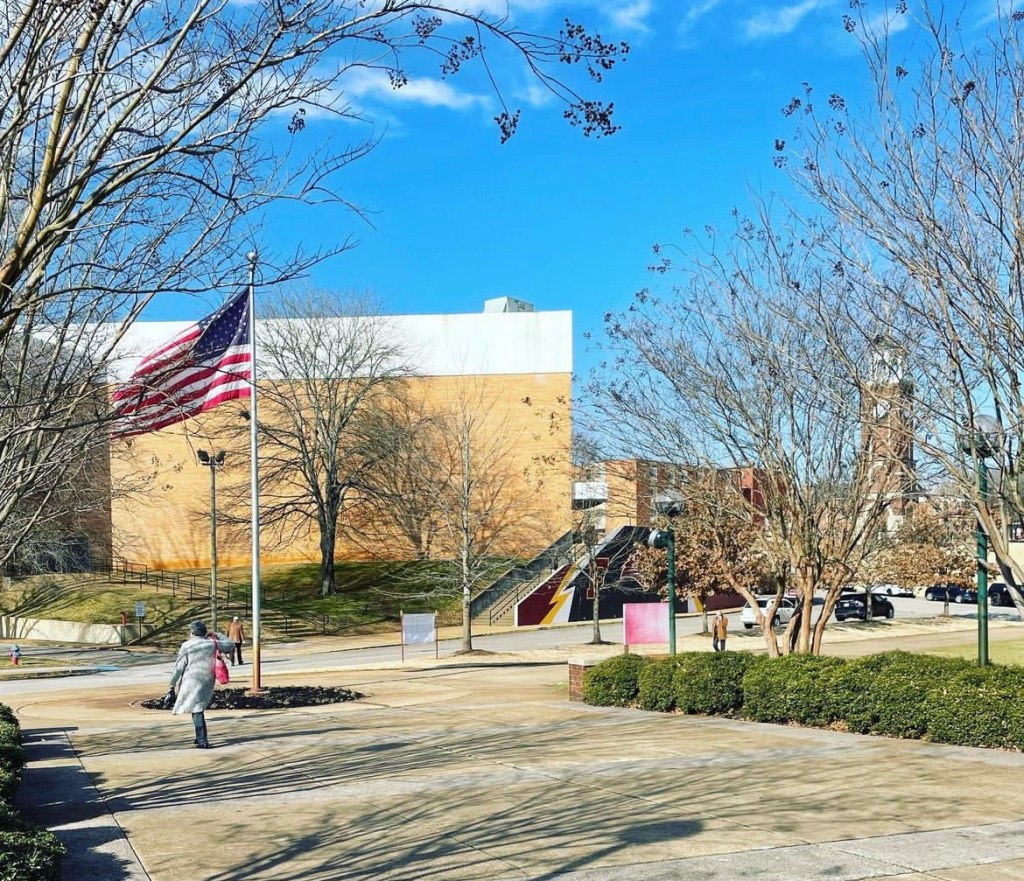
While on campus for Freed-Hardeman University’s annual Bible Lectureship last year, I stopped outside the Brewer Sports Center to check my schedule for the day’s sessions before heading over to the campus-wide chapel service. Many ministry/missionary booths were on display inside the main gym, and several people were coming and going- hurriedly seeking to make it to their next session.

A middle-aged man I did not know approached me and said, “I am sorry to bother you, brother, but it is my first time here on campus and perhaps you could help me. Do you know where the Loyd Auditorium is?”

I smiled, looked up, and said, “You’re on the right track. That’s it right there,” and pointed to the large building standing directly in front of him. He laughed at himself, thanked me, and walked off toward the prominent building.

Would he have found the auditorium without involving me?

Almost certainly, but he willingly admitted he wasn’t sure and needed help. Because he was willing to acknowledge he was lacking information, he asked for help and avoided unnecessary wandering or confusion. He was on the right path, but he wasn’t sure of his awareness and rather than unnecessarily going further with his uncertainty, he asked for directions.

Spiritually, we can find ourselves wandering with only a vague idea of where we are headed. Sometimes we choose to take the chance that will run into a sign or make it safely just by following the largest crowd. In reality, we have access to the direction of God’s word, a perfect waymaker in Christ, and willing guides in other believers who have traveled the same roads many times and by their experience in the Christian life can help point us on our way. Often the path to the goal is right in front of us if we are willing to follow it and ask for help along the journey.

As we travel forward in the life of faith, we must allow God’s word to guide our steps and never be afraid to admit when we feel lost or confused. We all will have doubts and fears along the journey, but we cannot allow fear, embarrasment, or pride to prevent us from seeking the help we need.

In asking for help, we admit our limitations, and we open a door for others to use their gifts for God’s glory.

In looking to Jesus, we see a perfect path to follow. In leaning on each other and the wisdom of those who have walked this life before us, we receive the blessing of their experience, and they receive the blessing of sharing our fresh enthusiasm as we seek to walk in the way of Jesus.