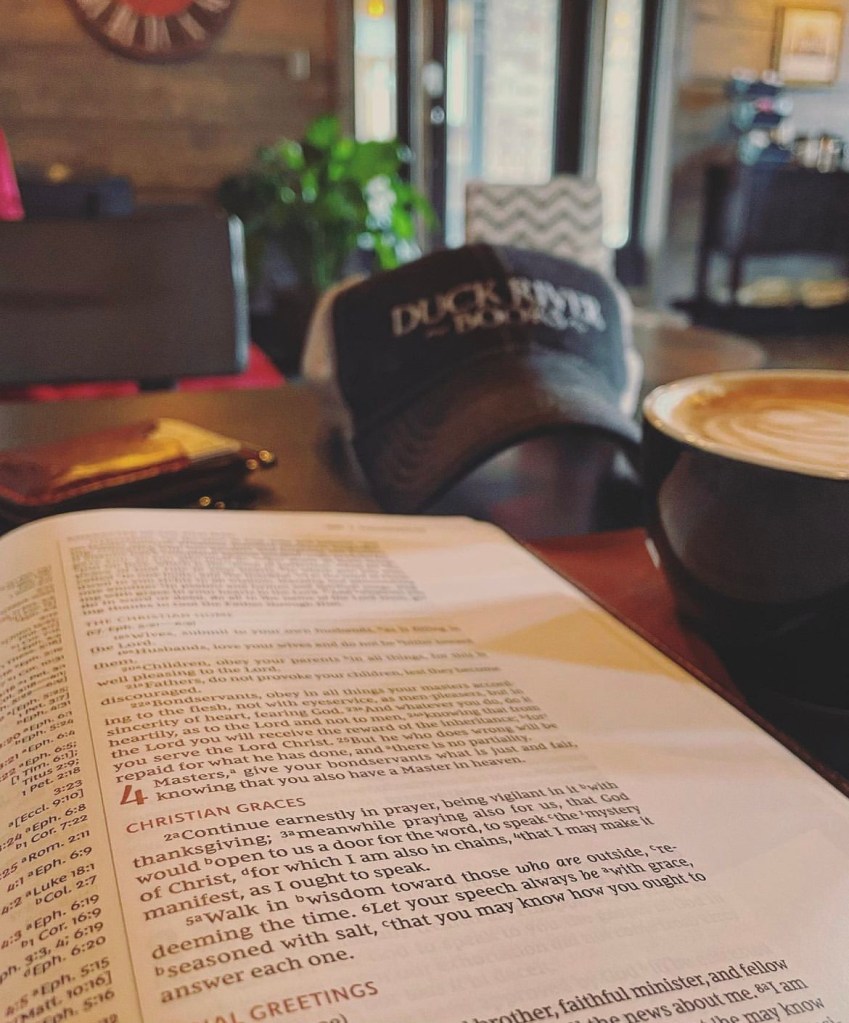
Out of the overflow…

Over twenty years ago during my first college semester, I took a required course in public communication. While our professor detailed many concepts about developing and outlining different types of effective presentations, one idea especially stuck with me. He reflected on the fact that the most impactful sermons, speeches, and even sales pitches were often those that were less scripted and simply overflowed naturally as the speaker shared freely about a truly personal passion.

“Learn all you can about whatever you love, and you can always speak from the overflow.”

Some people seem born to speak from the overflow.

As a young boy, I listened to my dad’s friends and their seemingly endless streams of sports conversations. Anything from obscure Major League Baseball records to the local high school basketball tournament brackets from 30 years before, these men knew all the details. In that pre-Google world, they had no need to look up information each time a question arose- their lifetimes of passionate fandom had prepared them to respond quickly and accurately on almost any matter sports-related. They loved sports, and they willingly spent their time discussing and debating their passion with anyone who would listen.

Having both heard and given thousands of sermons in my life, some of the most memorable came from the overflow that welled up from within the preacher- those moments that went “off script” and poured out from the depths of the heart. Even the timeless closing of Martin Luther King Jr.’s “I Have a Dream” speech happened when he departed from his prepared notes and blended rhythmic cadence and lofty words to deliver a summation that has echoed down through the decades.

Scripture endorses speaking (and living) out of our passionate overflow.

In Luke 6:45, Jesus says, “A good man out of the good treasure of his heart brings forth good; and an evil man out of the evil treasure of his heart brings forth evil. For out of the abundance [overflow] of the heart his mouth speaks.”

As we look at people’s lives over time, their guiding principles are revealed through their words and actions. When a person drifts off script or private thoughts are caught on a hot mic, the reality of the heart is seen. While all people can and do fall short at times in moments of stress and frustration, the nature of a person’s overall character will be reflected in their lives over time.

Polished presentation of smooth talking points can mislead the masses for a time, but the heart’s abundance will always reveal our true character to those that know us best.

One of the most difficult aspects of navigating faith, family, and friendship is to be able to acknowledge when our loved ones are unaware of (or worse unconcerned about) the damage their unfiltered words cause to the people in their lives. Such overflow may seem incidental, but it springs from the depths of who we are. Over time in the casual, off book moments of life, the actual inclination of our hearts is seen- for better or worse. Believers must always seek to intentionally abide in the life-giving source of God’s love if we want our overflow to serve as grace-filled blessing to others.

The visible fruit that springs forth and ripens in the words and actions of our daily lives ultimately serves to openly reveal the hidden content of our hearts.

Good hearts overflow with good things that serve as a blessing and benefit all. The only way to overflow with blessings toward others is to fill our own hearts and lives with the goodness we are called to in Christ. If we find our own satisfaction in being filled with God’s loving truth, the overflow of our daily lives will both faithfully reflect divine love and serve as a blessing to each person we encounter.

God of all questions…

Perhaps you have heard well-meaning folks facing difficult circumstances say, “Well, it’s just God’s will, and we can’t question it.”

We may have at times even expressed this idea ourselves. This statement usually arises from a mindset that trusting God without irreverently seeking to understand the deep mysteries of His ways is the marker of a genuine faith.

While this logic often springs from a sincere heart, is this the way we are intended to understand faith? Does biblical faith require us to suspend our questions?

If faithful people are never supposed to ask questions, none of our faith heroes were actually very faithful- Abraham (Gen 15:2), Moses (Exodus 3-4), David (Ps 22:1), and even Jesus (Mt 27:34) all expressed a questions desiring to know the Father’s will more fully. If Jesus, echoing David, could so publicly question His Father in the midst of His greatest trial, why do we so often presume that questioning why things happen is a sign of a weak faith?

Their questions were not a sign of a lack of faith, but a sign of a lack of clarity of why God had called them to a particular task or how a particular challenge was to be resolved. The questions were not just to gain information, but to more fully understand the why of their circumstances.

They actively wondered how a righteous God could (or would) bring about the very promises He had given when their outward circumstances seemed to declare just the opposite result was occurring. Do you ever wonder that too? I sure have at different points in my life.

In Judges, Gideon asks the Angel of the LORD, “O my lord, if the Lord is with us, why then has all this happened to us?” And where are all His miracles which our fathers told us about, saying, ‘Did not the Lord bring us up from Egypt?’” (Judges 6:13) Is there an accusation in this query? Absolutely- at least on one level, but could his question not also be seen as confusion, frustration, or grief? Gideon believes the LORD has forsaken His people, and he lays his questions before God.

The LORD does not given Gideon a lecture; He instead empowers him with a clarifying mission. Often the answers we seek come not through a bright light of enlightenment but through a call to obedience and a reminder of God’s overarching promise that He will act for His glory and our good.

Sometimes Scripture answers questions by direct words or through the examples of others (Ps 119:105). Sometimes life’s circumstances resolve in such a way that we can seem to perceive the guiding hand of Providence working for our good (Rom 8:28). And sometimes the answers do not come, but we are the better for having asked the questions. If we learn more about God’s nature and our own spiritual journey through the process of questioning and struggle, may be the answer is not a single clean-cut truth, but the faith that emerges only through enduring the valleys of experience.

Paul writes in 1 Cor 13:12 that, “for now we see in a mirror, dimly, but then face to face. Now I know in part, but then I shall know just as I also am known.” The fact we can only see dimly shouldn’t stop us from looking for God and examining our own lives as we seek to conform them to His will.

The promise of faith becoming sight should be seen an invitation to keep searching and wrestling with our faith- not an excuse to avoid exploring our hearts and seeking to know God more fully simply because our understanding in this moment is limited.

I believe that, by faith, one day we will know all we need to know, but until then may we have the courage to keep questioning and the conviction that He will answer in all the ways we most need here and now.

Asking for directions…

When we are willing to ask for help, we receive as well as give a blessing.

When we are willing to humbly open our lives to instruction and correction, we create an opportunity for others use their talents and gifts to edify and encourage us.

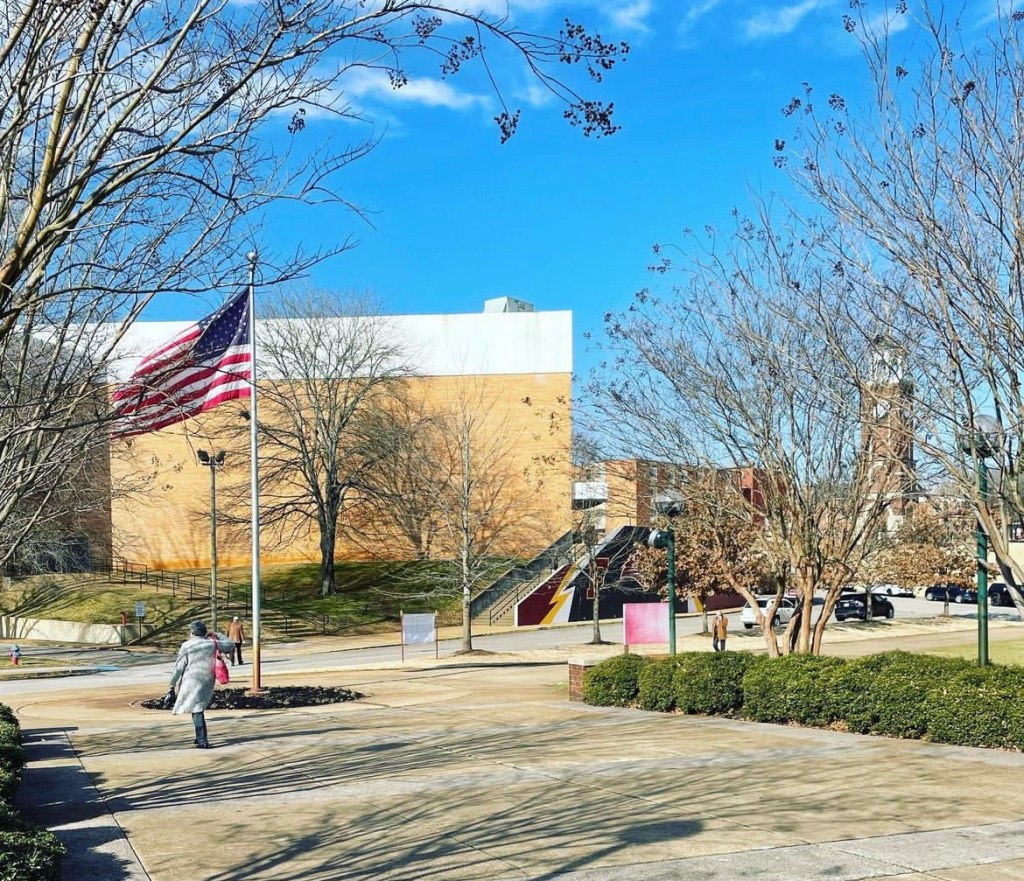
While on campus for Freed-Hardeman University’s annual Bible Lectureship last year, I stopped outside the Brewer Sports Center to check my schedule for the day’s sessions before heading over to the campus-wide chapel service. Many ministry/missionary booths were on display inside the main gym, and several people were coming and going- hurriedly seeking to make it to their next session.

A middle-aged man I did not know approached me and said, “I am sorry to bother you, brother, but it is my first time here on campus and perhaps you could help me. Do you know where the Loyd Auditorium is?”

I smiled, looked up, and said, “You’re on the right track. That’s it right there,” and pointed to the large building standing directly in front of him. He laughed at himself, thanked me, and walked off toward the prominent building.

Would he have found the auditorium without involving me?

Almost certainly, but he willingly admitted he wasn’t sure and needed help. Because he was willing to acknowledge he was lacking information, he asked for help and avoided unnecessary wandering or confusion. He was on the right path, but he wasn’t sure of his awareness and rather than unnecessarily going further with his uncertainty, he asked for directions.

Spiritually, we can find ourselves wandering with only a vague idea of where we are headed. Sometimes we choose to take the chance that will run into a sign or make it safely just by following the largest crowd. In reality, we have access to the direction of God’s word, a perfect waymaker in Christ, and willing guides in other believers who have traveled the same roads many times and by their experience in the Christian life can help point us on our way. Often the path to the goal is right in front of us if we are willing to follow it and ask for help along the journey.

As we travel forward in the life of faith, we must allow God’s word to guide our steps and never be afraid to admit when we feel lost or confused. We all will have doubts and fears along the journey, but we cannot allow fear, embarrasment, or pride to prevent us from seeking the help we need.

In asking for help, we admit our limitations, and we open a door for others to use their gifts for God’s glory.

In looking to Jesus, we see a perfect path to follow. In leaning on each other and the wisdom of those who have walked this life before us, we receive the blessing of their experience, and they receive the blessing of sharing our fresh enthusiasm as we seek to walk in the way of Jesus.

Coffeeshops & redeeming the time…

For Jarrod Bailey

At times, I overhear some pretty intense conversations in coffeeshops.

Some are romantic, some are financial, and, of course, some are religious.

With each passing year, I realize more and more that now in my late thirties, I am just starting to truly learn to listen with less judgment and more grace. At times, I hear echoes of my own old bravado and the absolute certainty so present in younger voices- a boldness that I now recognize so often hides pain, shame, and fear.

We tend to get louder when our own arguments start to cave in around us.

Assurance seldom shouts.

Now when I hear arguments I might have tried to win 20 years ago or may have rolled my eyes at ten years ago, I just seek to listen and try not to interfere too much with the process of growth in others.

My faith is central to me, but life is teaching me- mostly through its trials and my own errors- that presence and patience and the passage of time often prove far more essential to lasting clarity than my knee-jerk sharing of self-pious platitudes or one-size-fits-all certainties. Growth and maturity almost always seem to take time, experience, and some good old-fashioned failure.

I can’t endure that process for anyone else.

Neither can you.

At this point in my life, it’s becoming less and less about winning arguments or calling out every perceived act of arrogance or error, and it’s becoming more and more about showing up faithfully, listening patiently, and loving fully.

It’s that simple and it’s that hard- and, as a friend of mine would say, it’s amazing and it’s awesome.

I can do it, and you can too.

There’s always a seat at the table, and the coffee’s always on.