Come aside and rest awhile…

On reaching another birthday, I am realizing my physical resilience is not what it was years ago. Two decades ago, as a young minister, I could get up early, stay up late, and do a lot in between with seemingly little physical cost. While we often experience decreasing physical energy as we age, spiritual fatigue is a more subtle danger facing us in our constantly overscheduled world.

We live in an age of constant rush. Advances in technology have made daily tasks easier/faster, but rather than taking more time to rest and engage with friends and family, we have allowed cultural pressures to convince us to add even more busyness to our lives.

There never seem to be enough hours in the day or days in the week to accomplish all of our plans. We constantly bemoan our lack of time, but in reality, we are often choosing to take on more than is healthy for us- both physically and spiritually.

Those walking through addiction recovery understand that the danger of relapse dramatically increases during times of stress- hunger, loneliness, fatigue, shifting schedules, or relationship crises. Just as acute stress can pose dangers, potential pitfalls abound when we continually chase the idol of busyness.

In our constant pressing forward, we invite damage to our health, our relationships, and ultimately, our connection with God.

Blinded by busyness, we often refuse to heed the warning signs of overwork and overstimulation.

If we do not intentionally seek rest, we will unintentionally break down under the constant strain of our schedules.

This truth is not only a pillar of contemporary self-help books, the importance of rest is a principle deeply rooted in Scripture.

While murder and adultery are condemned in the Ten Commandments, weekly rest is commanded (Exodus 20:8-11). This detailed idea of Sabbath as a day of rest looks far different than most of the weekend rituals we practice today.

On the very day God’s Old Testament people were told to abstain from all work, modern believers often attempt to frantically jam more activity into the end of our week.

On Sunday when the New Testament saints gathered for longer periods worship (Acts 20:7), we often rush through our worship (or skip it entirely) in order to pack in baby showers, bridal teas, ball practices, family visits, grocery shopping, and preparations for the upcoming week.

The concept of the “Sunday scaries,” the idea that the anticipation of the coming week’s overwhelming busyness invades our day of rest and overwhelms our peace of mind, is a reality for many today.

Surrounded by our culture of hustle, we each must find ways to rest- even as we live in the midst of such external busyness. This need for grounding calm in a chaotic world is nothing new for believers.

In the midst of trauma and unrest, David strengthened himself in God (1 Sam 23:16). In the midst of persecution and physical danger, God provided sleep and food for Elijah (1 Kgs 19:4-7).

In the gospels, Jesus withdrew and prayed alone with His Father- both as a regular practice (Lk 5:16) and at especially critical moments (Lk 6:12-13). In the midst of a period of exceedingly fruitful ministry that proved overwhelming to the disciples, Jesus invited them to pull back, regroup, and rest (Mk 6:31).

If Moses, David, Elijah, Peter, and even Jesus needed times of rest and renewal, we are foolish to think we can just keep running at full speed without disastrous consequences.

Mature believers must come to recognize the self-deception we embrace whenever we trust our own strength and proceed to pile on more and more busyness wearing ourselves thin with constant activity.

Whenever human ability alone is trusted as the source of spiritual strength, failure is certain.

We must be willing to set our minds on the things of the Spirit (Rom 8:6), and then intentionally seek the rest and renewal that can only come through time spent in God’s presence.
Why Memorials Still Matter

As Memorial Day arrives this weekend, we remember the sacrifices made by those who have given their lives in service to our country.

Different than Veterans Day or the Fourth of July, Memorial Day is intentionally set aside as a day to remember those who “gave the last full measure of devotion” to uphold our freedoms.

It is ironic that a day intended to provide a national pause for reflection is often seen by many as the kickoff to the increased busyness of the summer season.

While not the first society to set aside times of remembrance, we are living in a time and culture which deeply needs memorial pauses in the midst of our hectic lives.

Scripture is full of memorials and monuments that were recognized and celebrated by God’s people. These holidays/places were established both so that the people could remember the great moments in their shared history and so they could use those memories as a means to teach the next generation.

Scripture speaks about both times for remembrance (Passover; Purim) as well as special places dedicated as memorials. Abraham’s one land purchase in Canaan was a dedicated burial ground. In later centuries, the tabernacle/temple centered the holidays and sacrifices around a visible reminder of God’s presence. While these holy places were expensively furnished and elaborately decorated, most memorials lacked any such finery- their value was tied to an event in the people’s collective memory.

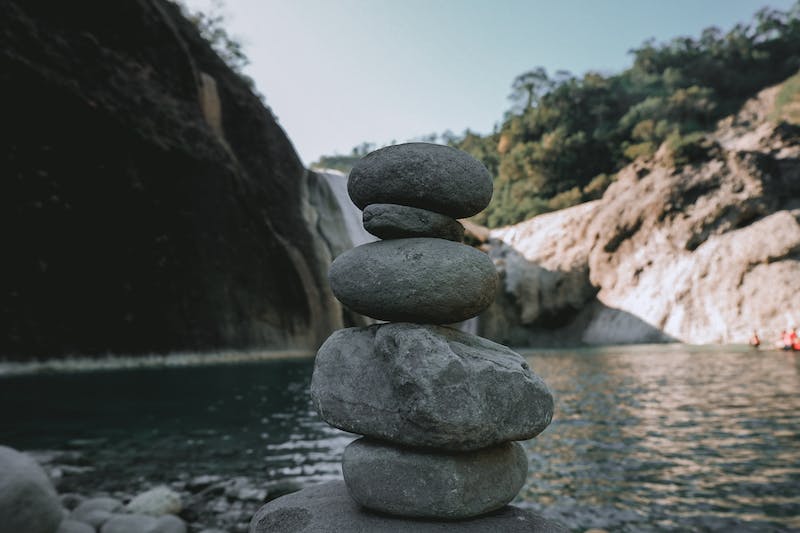
In Joshua 4, God’s people piled up rocks at the Jordan River as they crossed over on dry land. One set of stones was placed in the midst of the riverbed and another on the shore where the people camped after crossing over. Each memorial contained a symbolic number of stones (12) and was given with the specific purpose of providing a prompt for witnesses as they recounted the miracle to their children.

In a land full of finely-carved idols, these rough stones served to remind the people that their own craftsmanship and skill could provide nothing to compare with the power of the one true God. The stones were to offer an answer from the past to the future question, “what do these stones mean to you?”

In the coming years, the older generation could point at the stones and say, “I will never forget that day- the river was at flood stage and far beyond its banks, but as the priests stepped forward, the LORD stacked up the waters in a heap, and the whole nation, thousands upon thousands of us, walked across on dry land just as our parents had crossed the Red Sea. When we moved forward, the LORD opened the way for us. And, at His word, we gathered up and placed these stones so that we might never, ever forget our deliverance.”

It would be wonderful to say the people of God always took the time to remember and reflect on God’s provision and power, but sadly, neither the Old Testament believers or New Testament saints perfected the ability to keep such memories fresh in their minds.

In each generation, as people forgot the past or commercialized the faith, new voices (such as Elijah, Josiah, John the Baptist) were needed to remind God’s people of the past in order to equip them for the present and prepare them for the future.

We are no different.

In a world that always seems to be moving faster, we need to take the time to pause and to remember.

As God’s people, we need the reminders of past blessing and the strength such memories provide to build up hope in the present.

As we reflect on those who sacrificed for our country in the coming days, may we remember and give thanks. May we likewise remember the blessings experienced in the life of faith, and seek to faithfully pass this legacy forward to the next generation.

Our Good Father

Recently an older man recounted to me his experience of leaving a small town in West Tennessee in the early 1950s to seek an athletic scholarship at a junior college in the Mississippi Delta.

After a couple of weeks of intense two-a-day practices in the swampy July heat of a Mississippi summer, the young man decided he had seen enough. Without any money, he called his parents late one evening to tell them he would come home and go to work instead of attending college. He would leave the next morning- hitchhiking back to Tennessee, and they could expect him home in a couple of days. He told the coach and his prospective teammates of his plan before lying down for the night.

After a few hours of fitful sleep, he felt himself being roused from his bunk for what he assumed was the normal 5 AM practice.

“I told y’all, I made up my mind. I am not going to stay here. I am going to go home in the morning.”

This man’s eyes glisten even seven decades later as he recounts the moment:

The thing was it wasn’t the coach at all. It was Daddy. He said, “Come on now, son, and get up, we’ve come to take you home.He never said nothing about it one way or the other, but he must have gotten together the gas money, left right after I called, and drove all that way through the night to get me. He never made me sorry I went or that I didn’t stay. He actually never said anything about it again- he just came and got me and brought me home.


So often in life, we take on more than we can handle- sometimes things that are wrong in themselves, but perhaps just as often, we tackle right things at the wrong time. When we reach our breaking point, we often think all that awaits us is a lecture, a criticism, or an “I told you so.”

The people around us certainly do respond that way at times. It seems so easy to see the errors and missteps in others’ lives- even as it often is so difficult to recognize them in our own.

But our God is different.

He is a Good Father that extends grace to us when we cannot see the clear way home. We are the ones who prepare speeches, practice talking points, and seek to bargain our way back into favor- He is the one who runs to us and lavishly extends welcome and grace (Lk 15).

Like our Father, Jesus, our beloved elder Brother, doesn’t make us try to figure out how to hitchhike up to Him to heaven, but instead humbly comes to us and extends compassion and models a new, better way of living (Phil 2:5-11).

The Spirit and the Scriptures are living and active forces in our lives- lifting our words higher in prayer (Rom 8:26) and guiding our steps day by day as we journey through this life (Ps 119:105).

That homesick teenager graciously brought back home almost 70 years ago, married the sweet beauty queen from the rival high school, built a local business through honesty and hard work, raised two children, and eventually became my grandfather.

He never earned that college degree, but his four grandkids each did, and we went on to have multiple advanced degrees between us- in education, business, pharmacy, and ministry.

He taught us all more life lessons by his example than he ever could have with any amount of higher education- quizzing us on our multiplication prowess at the dinner table, refusing to let us win at a game of H-O-R-S-E, serving with integrity in public office in a small town for decades, and loving each of us just as we were in all the highs and lows of life.

I give thanks that my great-grandfather who I don’t remember drove through the night down to the Delta and to bring home a homesick boy who would grow into a man I will never forget. Because he showed up with love rather than a lecture, that single act of grace lives on, and an entire family exists and our individual stories are unfolding as lives that are committed to growing in grace.

Grace is like that- unearned, undeserved, and most often, unexpected.

In life, sometimes we all need some correction, but we always need more grace.

Grace begets grace, and when we offer grace to one other, we are growing to be more and more like our faithful Father.

No act of grace, however small it seems, is ever wasted in the Father’s will.


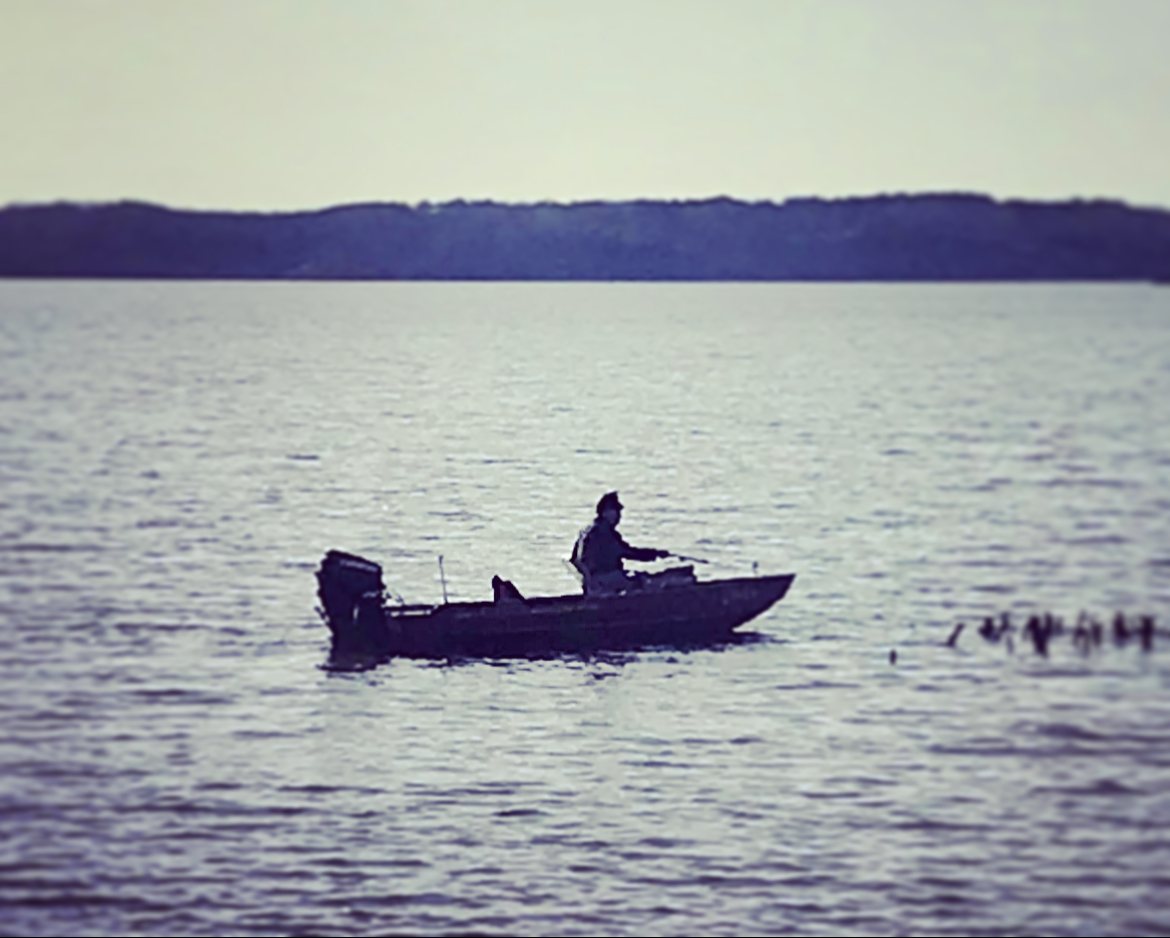
Last night, shedding his earthly tent battered by years of toil and broken by recent sickness, my grandfather took his final breath here, and passed into the presence of the great cloud of witnesses and embrace of our Good Father. Like a boat slipping into the water in the pre-dawn stillness of his beloved Kentucky Lake, he left us here and went on to his reward.

We grieve today, but by the grace of the same Good Father, we know some day we will be united in a better land where every sickness ceases, death divides no more, and all who are weary are at rest.

We are thankful that, while we sorrow now, it is a sorrow drenched in the promises of our Good Father and in the hope of better things to come (1 Thes 4:13-18).

Back to December…

I have never lived in a town of more than a couple of thousand people. 

I like rural life, and while I love to travel to cities and appreciate the conveniences of larger towns, I have chosen to live my life in small, familiar places. 

A little more than a year ago, a major tornado ripped through our little community and left destruction in its wake.

City hall gone.

Fire station gone.

Businesses gone.

Offices gone.

Church buildings gone.

Homes gone.

All gone in a moment.

As deep as the scars of the physical destruction have been, the damage has not all been visible- a breaking took place that has both divided and bonded our community in ways we cannot yet fully understand and may never fully know.

I have been reading Wendell Berry’s fiction as a treat to myself following the end of grad school, and in A Place on Earth, he describes the valley that flooded outside his fictional community of Port William, Kentucky- how the local landmarks were rearranged and erased and how nothing was ever the same- except that it was all still exactly the same.

Small places- maybe all places- are like that. 

Always both foreign and familiar.

Never seeming to change, yet never staying quite the same.

I took a drive to pray, to reflect, to give thanks, and to allow myself to feel the weight that this year especially has brought.

To discern what needs to be remembered and what is better forgotten.

To pause and pray at church graveyards and cemeteries.

To consider what has passed on and what remains behind.

I love the holiday season and the hope of a new and better year ahead, but it was a lovely day to be quiet and still before we leave the old behind and stretch forth to embrace the new.

I am grateful for this life, this pace, and this place.

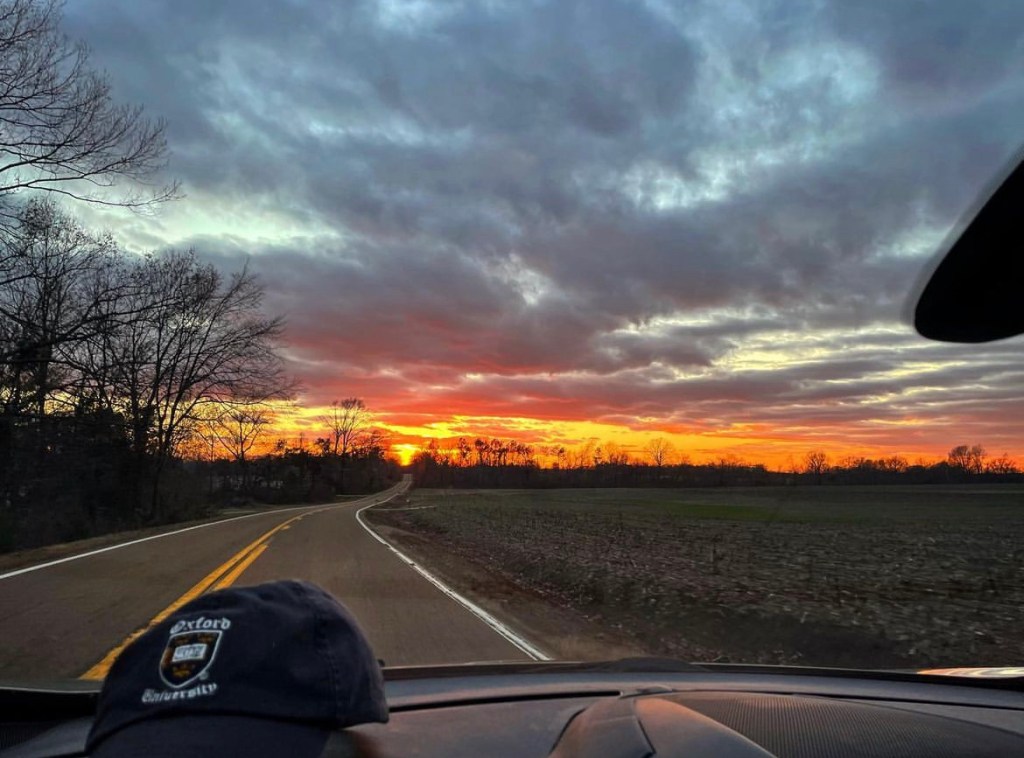
And the December sunset over Sharon was not a bad nightcap- even if it did happen at 4:45 PM.