Out of the overflow…

Over twenty years ago during my first college semester, I took a required course in public communication. While our professor detailed many concepts about developing and outlining different types of effective presentations, one idea especially stuck with me. He reflected on the fact that the most impactful sermons, speeches, and even sales pitches were often those that were less scripted and simply overflowed naturally as the speaker shared freely about a truly personal passion.

“Learn all you can about whatever you love, and you can always speak from the overflow.”

Some people seem born to speak from the overflow.

As a young boy, I listened to my dad’s friends and their seemingly endless streams of sports conversations. Anything from obscure Major League Baseball records to the local high school basketball tournament brackets from 30 years before, these men knew all the details. In that pre-Google world, they had no need to look up information each time a question arose- their lifetimes of passionate fandom had prepared them to respond quickly and accurately on almost any matter sports-related. They loved sports, and they willingly spent their time discussing and debating their passion with anyone who would listen.

Having both heard and given thousands of sermons in my life, some of the most memorable came from the overflow that welled up from within the preacher- those moments that went “off script” and poured out from the depths of the heart. Even the timeless closing of Martin Luther King Jr.’s “I Have a Dream” speech happened when he departed from his prepared notes and blended rhythmic cadence and lofty words to deliver a summation that has echoed down through the decades.

Scripture endorses speaking (and living) out of our passionate overflow.

In Luke 6:45, Jesus says, “A good man out of the good treasure of his heart brings forth good; and an evil man out of the evil treasure of his heart brings forth evil. For out of the abundance [overflow] of the heart his mouth speaks.”

As we look at people’s lives over time, their guiding principles are revealed through their words and actions. When a person drifts off script or private thoughts are caught on a hot mic, the reality of the heart is seen. While all people can and do fall short at times in moments of stress and frustration, the nature of a person’s overall character will be reflected in their lives over time.

Polished presentation of smooth talking points can mislead the masses for a time, but the heart’s abundance will always reveal our true character to those that know us best.

One of the most difficult aspects of navigating faith, family, and friendship is to be able to acknowledge when our loved ones are unaware of (or worse unconcerned about) the damage their unfiltered words cause to the people in their lives. Such overflow may seem incidental, but it springs from the depths of who we are. Over time in the casual, off book moments of life, the actual inclination of our hearts is seen- for better or worse. Believers must always seek to intentionally abide in the life-giving source of God’s love if we want our overflow to serve as grace-filled blessing to others.

The visible fruit that springs forth and ripens in the words and actions of our daily lives ultimately serves to openly reveal the hidden content of our hearts.

Good hearts overflow with good things that serve as a blessing and benefit all. The only way to overflow with blessings toward others is to fill our own hearts and lives with the goodness we are called to in Christ. If we find our own satisfaction in being filled with God’s loving truth, the overflow of our daily lives will both faithfully reflect divine love and serve as a blessing to each person we encounter.

Making It Look Effortless?

Recently I heard an older woman praising a young mom’s ability to manage multiple family, work, and social responsibilities with the exclamation, “You just make it all look so effortless!”

We understand what she actually meant: “You are so talented and skilled at difficult things that it seems like you don’t even have to try very hard. You’re great!”

We know this compliment is intended as praise- the young mother appeared so skilled at managing multiple challenges that her busy life appeared to others to naturally flow with ease and grace. In reality, the busy mom was no doubt getting up early, dealing with stress related to her children and job, facing the daily struggles of life, relationships, and faith even as she “made it look easy.”

Appearances and reality are often not completely congruent- what others see may not be the entire truth of what we are experiencing as we live out our lives. Some folks around us seem to have it all together, but may actually be falling apart. Others are facing extreme outward challenges with their health, finances, or relationships, but may, in reality, have a deep sense of peace abiding within.

In a passing moment, our perceptions of others are often inaccurate and incomplete.

When we think of Moses, we think of a strong, fearless leader standing before Pharaoh demanding freedom for God’s people, but Scripture goes out of the way to show he was reluctant to accept his call to leadership and consented only once his more eloquent brother Aaron was allowed to be his spokesman. Elijah, who projected prophetic strength in public, was often despondent and discouraged before God. Paul confessed that his many persecutions and concerns for the churches he had planted were sources of anxiety for him and would have overwhelmed him had Christ Himself strengthened and sustained his ministry.

No one is quite as “together” as they seem to the watching world.

In Scripture, women often shine as examples of understated strength. In a culture where they were often in the background, women rise up and are held out to us as heroes of faith.

Rahab, a foreigner with a questionable line of work, becomes the lifeline for God’s people as one who acted in faith and whose name is eventually found in the genealogy of Jesus. Ruth, also an outsider, demonstrates the ability to care for an aged mother-in-law, to be the breadwinner of her household, and to secure a future for herself and her family with her godly character. Esther stands up to law, custom, and the whims of a fickle husband to intercede for her people in their darkest hour. Women are present throughout the ministry of Jesus and the remainder of the New Testament- hosting, financing, worshiping, teaching, and connecting the congregations of the early church.

A faithful life is never effortless for anyone regardless of what appears on the surface. The life of faith is an active one as we seek to grow in grace and serve others, but such commitment is worth our energy and effort as we seek to live for Christ.

May we look for faithfulness in unexpected places this week, and praise it when we find it.

May our own focus be more on building our inner character over maintaining our outward comfort.

When we willingly press further into God’s service by making an effort to use the gifts He provides, He gladly gives us the strength to joyfully live by faith.

The everyday nature of greatness…

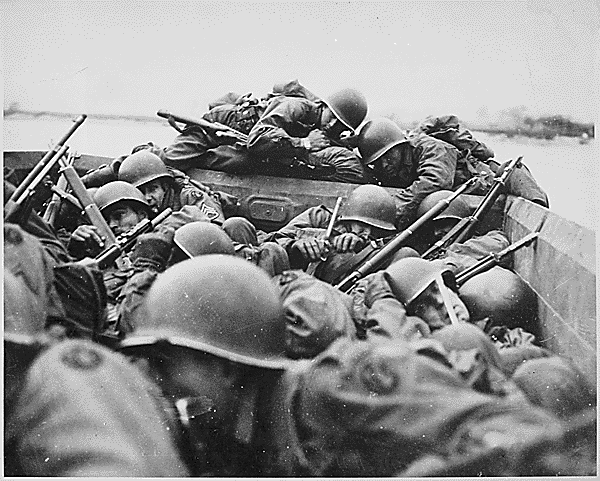
Image credit: National Archives. Crossing the Rhine under enemy fire at St. Goar- March 1945. ID: 535978

The Second World War ended almost 80 years ago. While thousands of books, films, and accounts of the conflict have been recorded, each day fewer people who experienced combat and their loved ones who lived through the conflict on the home front remain. Only a few years at most remain until the last members of America’s “greatest generation” pass from this life.

These brave men and women did more than protect the dream of democracy and liberate the world from tyranny- they also form the last living link with the devastation of the Great Depression and the economic rebuilding and social restructuring of America. Many of these same individuals became our social, political, and religious leaders who impacted the following decades through the Civil Rights era, the space race, and the explosion of new cultural movements and technological advances. People who were taught in one room schoolhouses saw the results of the atomic bomb, watched a man walk on the moon, and now can FaceTime their great-grandchildren on the other side of the world in an instant.

Every nation and every community have larger-than-life figures who tower over their history. Sometimes these men and women are politicians or war heroes or long-serving monarchs. Communities of believers have these people turned legends as well. Augustine, Luther, Wesley, Spurgeon, Mother Teresa, Martin Luther King, Jr., Billy Graham- such names evoke powerful memories among those who study church history. While such men and women were far from perfect, they each left a legacy that impacted the spiritual lives of millions. While it is unlikely that we will never achieve worldwide recognition, none of us is without influence. As we live from day to day, we are each crafting our personal legacy of faith.

Are you caring for a preschool-age grandchild a few times a week? Your attitude and influence will shape that child forever. Do you teach a Bible class to a half dozen seemingly-disinterested teenagers each Sunday morning? Some of those young people will grow up and remember not just the facts you shared, but the memory that you showed up week by week and sought to share the love of Jesus with them. Our impact is not always seen instantly or even measured in the course of our lives, but it touches eternity.

While we do not all have the measure of ability, each of us is charged with serving faithfully wherever he or she is planted.

You may not be gifted for greatness in the kingdom, but you are gifted for faithfulness- and faithful is what we are ultimately called to be.

Whether we are preaching to thousands from a prominent pulpit, influencing millions from bookstore shelves, or showing up to patiently love and minister to the handful of saints gathered in a rural congregation, it is not the size of the crowd, but the condition of the heart that determines faithfulness.

We do not look upon the photographs of D-Day or Iwo Jima, see the bravery there, and say “Well, those guys weren’t the generals or admirals or presidents or prime ministers, so they really didn’t matter.” Such a pronouncement would be blasphemy. It would disparage the faithful service of the very people who directly sacrificed the most in a vital moment in the world’s history. While political officials and military commanders were essential, the masses of the almost unknown soldiers were the key to lasting victory.

In the same way, God looks at His kingdom and sees value in each person. No one is nameless or small or insignificant in the kingdom of God. Honored professors, beloved authors, and celebrity preachers have their place, but the vital work of discipleship and ministry is most often carried out by unknown believers in overlooked places never seen by the majority of the watching world.

May we remember the truly great people that helped shape us into we are, and may we seek to use our gifts, whatever their shape or size, to pass on our blessings. We should never forget that our gifts, which may seem to us so very small, can be used for great good when we are willing to yield them faithfully in service to Christ.

Asking for directions…

When we are willing to ask for help, we receive as well as give a blessing.

When we are willing to humbly open our lives to instruction and correction, we create an opportunity for others use their talents and gifts to edify and encourage us.

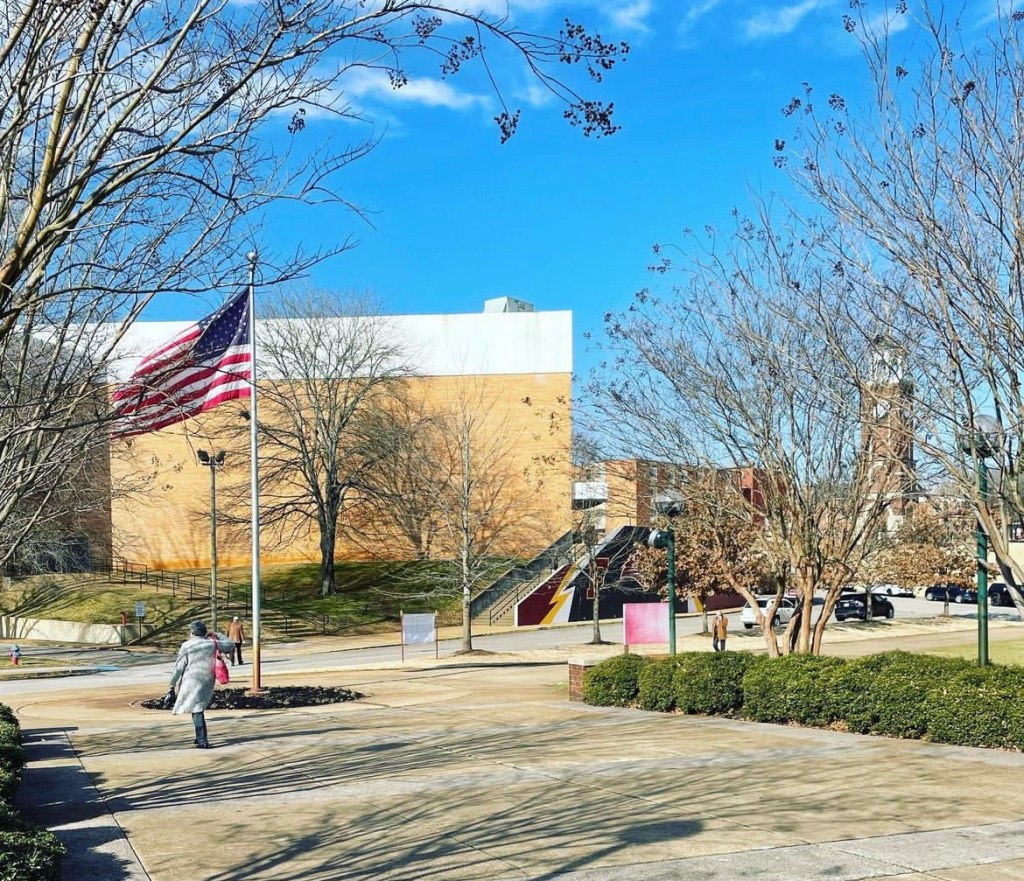
While on campus for Freed-Hardeman University’s annual Bible Lectureship last year, I stopped outside the Brewer Sports Center to check my schedule for the day’s sessions before heading over to the campus-wide chapel service. Many ministry/missionary booths were on display inside the main gym, and several people were coming and going- hurriedly seeking to make it to their next session.

A middle-aged man I did not know approached me and said, “I am sorry to bother you, brother, but it is my first time here on campus and perhaps you could help me. Do you know where the Loyd Auditorium is?”

I smiled, looked up, and said, “You’re on the right track. That’s it right there,” and pointed to the large building standing directly in front of him. He laughed at himself, thanked me, and walked off toward the prominent building.

Would he have found the auditorium without involving me?

Almost certainly, but he willingly admitted he wasn’t sure and needed help. Because he was willing to acknowledge he was lacking information, he asked for help and avoided unnecessary wandering or confusion. He was on the right path, but he wasn’t sure of his awareness and rather than unnecessarily going further with his uncertainty, he asked for directions.

Spiritually, we can find ourselves wandering with only a vague idea of where we are headed. Sometimes we choose to take the chance that will run into a sign or make it safely just by following the largest crowd. In reality, we have access to the direction of God’s word, a perfect waymaker in Christ, and willing guides in other believers who have traveled the same roads many times and by their experience in the Christian life can help point us on our way. Often the path to the goal is right in front of us if we are willing to follow it and ask for help along the journey.

As we travel forward in the life of faith, we must allow God’s word to guide our steps and never be afraid to admit when we feel lost or confused. We all will have doubts and fears along the journey, but we cannot allow fear, embarrasment, or pride to prevent us from seeking the help we need.

In asking for help, we admit our limitations, and we open a door for others to use their gifts for God’s glory.

In looking to Jesus, we see a perfect path to follow. In leaning on each other and the wisdom of those who have walked this life before us, we receive the blessing of their experience, and they receive the blessing of sharing our fresh enthusiasm as we seek to walk in the way of Jesus.

Embracing a daily spiritual practice…

Embracing daily spiritual practices should not be seen as an attempt to earn God’s grace or to increase His love for us- in Christ, we already have those blessings in abundance and no action on our part can merit more of God’s saving grace or bountiful gifts.

Spiritual practices should instead be centered in our desire to know God more fully and our desire to then seek His will for our lives more faithfully.

Realizing this difference changes our perspective.

When we are occasionally tired and fail to pray or busy and fail to study, we are not afraid of God’s wrath at our weakness, but we instead miss our time spent in His presence.

We are so connected to Him that to not spend time in devotion causes a loneliness in us and a longing hunger to renew our commitment to Him.

I want to grow in intimacy with God not out of some passionless sense of duty or fear, but out of a genuine desire to spend time and communion with my Father and my Friend.

When we reach this point relationally with God, devotion becomes a conversation we long for rather than a hurried errand we feel pressured to fit into our already packed day. We will long to meet the Lord in the morning and to come into our quietness with Him each night.

Rather than driving us toward isolation, such private times serve to deepen our relationship not only with God but with other like-minded believers. As we maintain daily intimacy with God, our times of gathered worship with others are not just a religious chore to be checked off but a centering of our lives celebrated in community with fellow Christ followers. When we find greater joy in the daily sharing of time with God, the strength of that personal relationship should stir within us a longing for the collective worship we find in His church.

As we mature, each believer will recognize the need for different approaches and rhythms in private devotional life, yet all of us can come to love God more deeply and see His will for us more perfectly through faithfully spending time each day in His presence. When we love being with Him and make growing our relationship with God a priority, we are better equipped to take the inner strength gained in solitary devotion into the daily tasks of life and to become more closely attuned to the spiritual needs of others.

Time marches on…

Earlier this month, I graduated with my Master’s degree in ministry after beginning my undergraduate studies 20 years ago. As I approach the last full year of my thirties and with time’s gathering to glory of more and more family and friends in recent years, it seems like a good moment to reflect as the calendar page turns yet again. This photo fell out of an aging album a few weeks ago during Thanksgiving festivities, and in looking at my younger self, it seemed like a story come full circle.

I am sure this shot was taken at a Vacation Bible School decades ago (probably around 1990 or so), and my first thought was that Mrs. Johnnie Bell Webb would have been at her post passing out Kool-aid and cookies in the fellowship hall. Paper plates overflowing with her signature saltines and peanut butter would be stuffed into our mouths as we bolted from crafts to playground and back again.

Mrs. Johnnie Bell passed away a few weeks ago, but I realize more and more that she was one in a long lineage of unsung heroes who form the mortar that holds the church tight and together without being singled out for praise.

I have been blessed to be able to spend my life sharing Jesus with others for many years now, and I am grateful for each opportunity, but I know too well that much of the Christian influence in my own life came from those faithful believers who showed up after work to glue popsicle sticks, who spent their Saturdays draining baptisteries, and who cooked countless casseroles to feed the grieving and the lonely.

The church is a body with many parts, yet we who stand week to week on platforms and in the pulpits often get a disproportionate amount of the praise. More than ever, I am coming to see that the quiet, committed disciples who show up and do whatever is needed are among the church’s greatest strengths. 

In Christ’s kingdom, there is no greater honor than to be, as He was, the servant of all.

.