How We Hold Together


You have likely seen such vehicles after a big community yard sale. Driven by a person who “was just going to look,” it is now filled with two tables, three mismatched chairs, some assorted shelves, multiple lamps, and several boxes of odds and ends. This bounty is held in the back of the small pickup with bungee straps, some well-worn packing twine, and no small measure of hope. As this heavy-laden truck passes, you think, “There is no way that will hold together.”

When we look at the church as described in the pages of the New Testament, any outsider, even one sympathetic to this new movement, would have taken one look at the odd assortment of people that made up that first Christ-centered community, and thought, “There is no way they will hold together.”

And yet they did- often remarkably well.

We could credit God’s favor on the early church, and Scripture testifies to that reality. It could be pointed out that beginning on the first Pentecost after the resurrection of Jesus the church was blessed with the powerful, miracle-bringing gifts of the Holy Spirit, or the fact that almost all of the original leaders had been personally discipled by Jesus Himself. While all of these factors combined to bless the church, I also believe those early disciples had to choose to stay focused and faithful to their message and this shared message of love, grace, and hope experienced in Christ Jesus not only anchored them in Him- it bound them to each other.

One trait we clearly recognize in the early church was their belief that both blessings and burdens were to be communal experiences. This connection was material and financial, but it was also expressed in deep emotional and spiritual commitments. These first Christians were concerned about the general welfare of the community of faith. In the survival-of-the-fittest world of the Roman empire, a world not all that different from our own, Christians were to be moved by each other’s joys and sufferings. Paul summarized this spirit in the quotable reminder to the congregation at Rome- “Rejoice with those who rejoice, and weep with those who weep” (Rom 12:15).

Not only was the early church emotionally united, they also sought (often imperfectly) to subdue all party spirit to the authority of Christ. Identifiers that shaped their worldviews and relationships outside of the church were to be overwhelmed by the higher calling of devotion to Christ. Paul wrote to the churches of Galatia to remind them that distinctions of ethnicity, gender, and cultural background, while not ceasing to exist outwardly, were to be submitted to the greater unity found in shared commitment to Christ. As long as differences were allowed to hold dominant sway over Christian hearts and behavior, the church struggled, but when such differences were acknowledged as present but placed under Christ’s authority, the church benefited and was blessed by differing perspectives. Ultimately, as a patchwork of different regions, races, and worldviews, the church was forced to confront the reality that, as “the greatest of these,” love must serve to align diverse gifts and perspectives (1 Cor 13).

Today, if we want to hold together and present a united witness to our world, we must love the truth of God’s Word and allow His Word to guide us in loving each other. We hold on to Jesus, and we strive to hold on to each another. This love for God and love for neighbor is the foundation not only of any lasting Christian unity but is also our best hope for a kinder, more grace-filled world.

Words That Build Up


We build some structures in our lives understanding that they will be temporary. Children enthusiastically build snowmen in the winter and enjoy constructing sandcastles at the beach. We may be thoughtful in putting up a tent for the night or building a duck blind for a season, but we recognize that the nature of such shelters is fleeting. Because of the limited uses and short lifespan of such projects, we invest in them differently than a home, a church building, or a historic structure.

The words we speak are more permeant than we often admit. When it comes to building others up, we must realize that our words today have the potential to make a difference that will echo in eternity.

Believers should never be guilty of flippantly using cutting phrases, sharp criticisms, or demeaning language toward others. Genuine compliments and encouragement should be the mark of Christian conversation while bitterness, vulgarity, and profanity must be banished from our lips. Words have the power to hurt deeply, and their impact lingers long after the exchange is over. Harsh words can knock down the work of years in a moment, and we as believers are to be builders not bulldozers when it comes to our interactions with others.

The apostle Paul writes in Ephesians 4:29, “Let no corrupt word proceed out of your mouth, but what is good for necessary edification, that it may impart grace to the hearers.”

In speaking into the lives of others, we must look to remove corrupt communication from our lives. While this certainly includes overt profanity and lewd language, it also includes more subtle ways our speech can be used to erode the spirits of others. Gossip, boasting, half-truths, and mocking jokes made at others’ expense are just a sampling of ways our words can hurt.

As believers, we must appreciate that people are not punchlines and that even passing comments leave a lasting impact. Even after decades, we can remember how being teased as a child, mocked as a teenager, or chewed out by our first boss made us feel. We cannot control the words of others, but we can recognize that the words we release into the world are not simply a temporary venting of frustration but have the potential to impact lives far beyond the moment. Rather than being thoughtless or cruel, we should seek “necessary edification”- choosing to build up those around us with intentionally grace-filled speech.

In seeking to build others up, we should look for genuine strengths in the lives of those around us. We live in a social media, cable-news-saturated world that daily attempts to remind us of all the dangers and darkness swirling close by. When it comes to those we are interacting with face-to-face, we can cut through the noise and notice the blessings our family, friends, and neighbors bring into our lives. In conversation, we can choose to be thankful, positive, and kind thereby building a foundation of honoring God and imitating Christ in all our relationships.

We who experience life in Christ are blessed with His presence now and the confidence of joy in eternity, and yet sadly we can often be surly, standoffish, and suspicious. We dare not be known as cynical, critical, and crude in our interactions with others. While no one perfectly tames the tongue in this life (James 3), we cannot allow corrupting speech to become the default pattern of our conversations.

Our words matter, and we must use them as tools to build rather than weapons to wound as we live out our faith each day.

Friends are friends forever…

I don’t know how many times Bobby and I have prayed together through the years, but it’s been a lot.

Whatever season of my life for the past 25 years, Bobby has been there. The best of times, the worst of times, and a lot of times spent together on the way up or down.

We have acted in variety shows together, preached funerals together, talked baseball together, spoke on sermon series together, whitewater rafted together, hosted Bible studies together, survived multiple Fourth of July weeks in Mississippi together, traveled thousands of miles in his Ford Ranger together, and damaged at least one church van together.

Bobby (and the people I met through Bobby) influenced my faith, my college choice, and many of my personal and professional opportunities. As I grew up, we grew from teacher and student, to mentor and encourager, and then to partners in ministry and friends as equals.

We were sitting in line at the Wendy’s drive-thru in Huntingdon, TN one Wednesday night in 2015 after traveling to a summer series together when Ann Marie texted me to confirm plans for our first official date. I told Bobby, “Something just feels right about this.” Less than two years later, Bobby officiated at our wedding.

Bobby and I are different in many ways, but in one accord and complimentary in the things that matter most. I think sometimes we need people in our lives who love the same things, but love them in different ways or from difference perspectives. Rather than fostering competition, this tension actually creates a more authentic balance by encouraging both people to keep rethinking and stretching in life and ministry.

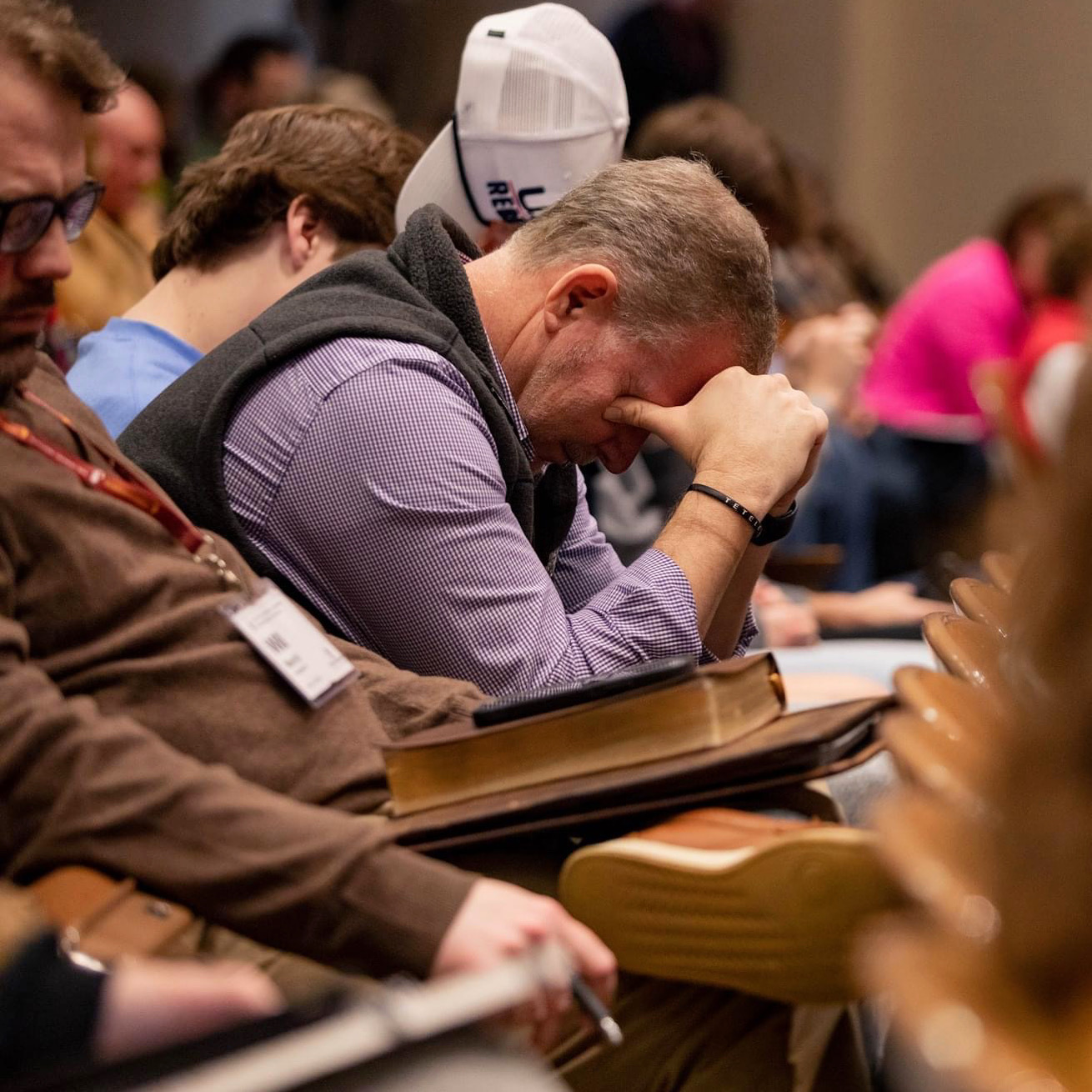
I am grateful for Bobby and our friendship, and I am so thankful that Freed-Hardeman University shared this photo from one of last week’s chapel services during the Bible Lectureship. Bobby’s son Will, now a student at FHU, is seated on the other side of him removing his Ole Miss cap as we begin the prayer.

Friendships shape who we are, and they also shape our views on every other aspect of life- family, business, politics, hobbies, sports, and, of course, faith. I hope we can all lean into the friendships that shape us into better, more faithful people who are seeking to encourage one another even as we imitate Christ.

“As iron sharpens iron, so a man sharpens the countenance of his friend.”
-Proverbs 27:17


Time marches on…

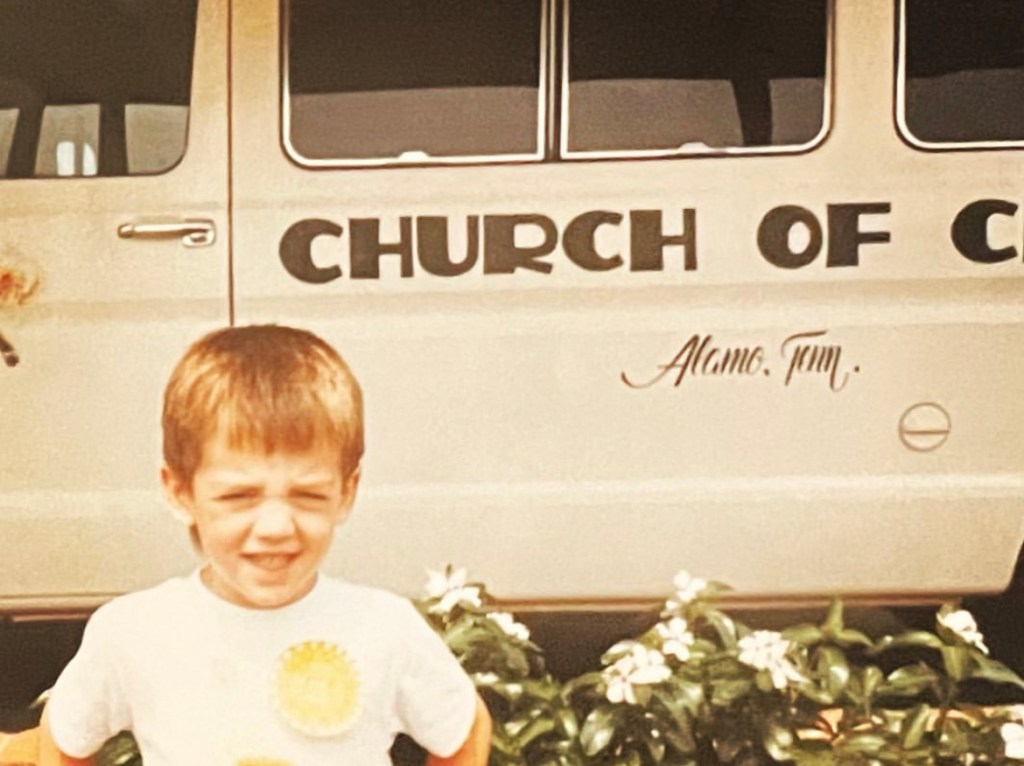
Earlier this month, I graduated with my Master’s degree in ministry after beginning my undergraduate studies 20 years ago. As I approach the last full year of my thirties and with time’s gathering to glory of more and more family and friends in recent years, it seems like a good moment to reflect as the calendar page turns yet again. This photo fell out of an aging album a few weeks ago during Thanksgiving festivities, and in looking at my younger self, it seemed like a story come full circle.

I am sure this shot was taken at a Vacation Bible School decades ago (probably around 1990 or so), and my first thought was that Mrs. Johnnie Bell Webb would have been at her post passing out Kool-aid and cookies in the fellowship hall. Paper plates overflowing with her signature saltines and peanut butter would be stuffed into our mouths as we bolted from crafts to playground and back again.

Mrs. Johnnie Bell passed away a few weeks ago, but I realize more and more that she was one in a long lineage of unsung heroes who form the mortar that holds the church tight and together without being singled out for praise.

I have been blessed to be able to spend my life sharing Jesus with others for many years now, and I am grateful for each opportunity, but I know too well that much of the Christian influence in my own life came from those faithful believers who showed up after work to glue popsicle sticks, who spent their Saturdays draining baptisteries, and who cooked countless casseroles to feed the grieving and the lonely.

The church is a body with many parts, yet we who stand week to week on platforms and in the pulpits often get a disproportionate amount of the praise. More than ever, I am coming to see that the quiet, committed disciples who show up and do whatever is needed are among the church’s greatest strengths. 

In Christ’s kingdom, there is no greater honor than to be, as He was, the servant of all.

.