Come aside and rest awhile…

On reaching another birthday, I am realizing my physical resilience is not what it was years ago. Two decades ago, as a young minister, I could get up early, stay up late, and do a lot in between with seemingly little physical cost. While we often experience decreasing physical energy as we age, spiritual fatigue is a more subtle danger facing us in our constantly overscheduled world.

We live in an age of constant rush. Advances in technology have made daily tasks easier/faster, but rather than taking more time to rest and engage with friends and family, we have allowed cultural pressures to convince us to add even more busyness to our lives.

There never seem to be enough hours in the day or days in the week to accomplish all of our plans. We constantly bemoan our lack of time, but in reality, we are often choosing to take on more than is healthy for us- both physically and spiritually.

Those walking through addiction recovery understand that the danger of relapse dramatically increases during times of stress- hunger, loneliness, fatigue, shifting schedules, or relationship crises. Just as acute stress can pose dangers, potential pitfalls abound when we continually chase the idol of busyness.

In our constant pressing forward, we invite damage to our health, our relationships, and ultimately, our connection with God.

Blinded by busyness, we often refuse to heed the warning signs of overwork and overstimulation.

If we do not intentionally seek rest, we will unintentionally break down under the constant strain of our schedules.

This truth is not only a pillar of contemporary self-help books, the importance of rest is a principle deeply rooted in Scripture.

While murder and adultery are condemned in the Ten Commandments, weekly rest is commanded (Exodus 20:8-11). This detailed idea of Sabbath as a day of rest looks far different than most of the weekend rituals we practice today.

On the very day God’s Old Testament people were told to abstain from all work, modern believers often attempt to frantically jam more activity into the end of our week.

On Sunday when the New Testament saints gathered for longer periods worship (Acts 20:7), we often rush through our worship (or skip it entirely) in order to pack in baby showers, bridal teas, ball practices, family visits, grocery shopping, and preparations for the upcoming week.

The concept of the “Sunday scaries,” the idea that the anticipation of the coming week’s overwhelming busyness invades our day of rest and overwhelms our peace of mind, is a reality for many today.

Surrounded by our culture of hustle, we each must find ways to rest- even as we live in the midst of such external busyness. This need for grounding calm in a chaotic world is nothing new for believers.

In the midst of trauma and unrest, David strengthened himself in God (1 Sam 23:16). In the midst of persecution and physical danger, God provided sleep and food for Elijah (1 Kgs 19:4-7).

In the gospels, Jesus withdrew and prayed alone with His Father- both as a regular practice (Lk 5:16) and at especially critical moments (Lk 6:12-13). In the midst of a period of exceedingly fruitful ministry that proved overwhelming to the disciples, Jesus invited them to pull back, regroup, and rest (Mk 6:31).

If Moses, David, Elijah, Peter, and even Jesus needed times of rest and renewal, we are foolish to think we can just keep running at full speed without disastrous consequences.

Mature believers must come to recognize the self-deception we embrace whenever we trust our own strength and proceed to pile on more and more busyness wearing ourselves thin with constant activity.

Whenever human ability alone is trusted as the source of spiritual strength, failure is certain.

We must be willing to set our minds on the things of the Spirit (Rom 8:6), and then intentionally seek the rest and renewal that can only come through time spent in God’s presence.

Why Memorials Still Matter

As Memorial Day arrives this weekend, we remember the sacrifices made by those who have given their lives in service to our country.

Different than Veterans Day or the Fourth of July, Memorial Day is intentionally set aside as a day to remember those who “gave the last full measure of devotion” to uphold our freedoms.

It is ironic that a day intended to provide a national pause for reflection is often seen by many as the kickoff to the increased busyness of the summer season.

While not the first society to set aside times of remembrance, we are living in a time and culture which deeply needs memorial pauses in the midst of our hectic lives.

Scripture is full of memorials and monuments that were recognized and celebrated by God’s people. These holidays/places were established both so that the people could remember the great moments in their shared history and so they could use those memories as a means to teach the next generation.

Scripture speaks about both times for remembrance (Passover; Purim) as well as special places dedicated as memorials. Abraham’s one land purchase in Canaan was a dedicated burial ground. In later centuries, the tabernacle/temple centered the holidays and sacrifices around a visible reminder of God’s presence. While these holy places were expensively furnished and elaborately decorated, most memorials lacked any such finery- their value was tied to an event in the people’s collective memory.

In Joshua 4, God’s people piled up rocks at the Jordan River as they crossed over on dry land. One set of stones was placed in the midst of the riverbed and another on the shore where the people camped after crossing over. Each memorial contained a symbolic number of stones (12) and was given with the specific purpose of providing a prompt for witnesses as they recounted the miracle to their children.

In a land full of finely-carved idols, these rough stones served to remind the people that their own craftsmanship and skill could provide nothing to compare with the power of the one true God. The stones were to offer an answer from the past to the future question, “what do these stones mean to you?”

In the coming years, the older generation could point at the stones and say, “I will never forget that day- the river was at flood stage and far beyond its banks, but as the priests stepped forward, the LORD stacked up the waters in a heap, and the whole nation, thousands upon thousands of us, walked across on dry land just as our parents had crossed the Red Sea. When we moved forward, the LORD opened the way for us. And, at His word, we gathered up and placed these stones so that we might never, ever forget our deliverance.”

It would be wonderful to say the people of God always took the time to remember and reflect on God’s provision and power, but sadly, neither the Old Testament believers or New Testament saints perfected the ability to keep such memories fresh in their minds.

In each generation, as people forgot the past or commercialized the faith, new voices (such as Elijah, Josiah, John the Baptist) were needed to remind God’s people of the past in order to equip them for the present and prepare them for the future.

We are no different.

In a world that always seems to be moving faster, we need to take the time to pause and to remember.

As God’s people, we need the reminders of past blessing and the strength such memories provide to build up hope in the present.

As we reflect on those who sacrificed for our country in the coming days, may we remember and give thanks. May we likewise remember the blessings experienced in the life of faith, and seek to faithfully pass this legacy forward to the next generation.

“But I believe…”

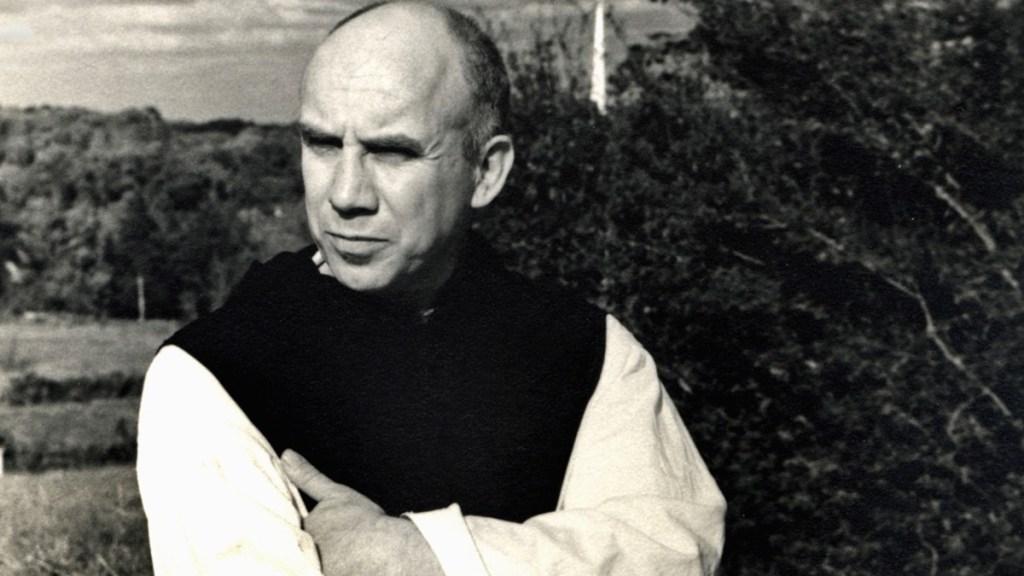
Photo credit: Abbey of Gethsemani


My Lord God, I have no idea where I am going.

I do not see the road ahead of me.

I cannot know for certain where it will end.

Nor do I really know myself, and the fact that I think that I am following your will does not mean that I am actually doing so.

But I believe that the desire to please you does in fact please you.

And I hope I have that desire in all that I am doing.

I hope that I will never do anything apart from that desire.

And I know that if I do this you will lead me by the right road though I may know nothing about it.

Therefore will I trust you always though I may seem to be lost and in the shadow of death.

I will not fear, for you are ever with me, and you will never leave me to face my perils alone.

Thomas Merton, Thoughts in Solitude

The Impression We Leave Behind

In recent weeks, two different musicians headlined stadium tours each promising three consecutive concerts held within a few hours of Weakley County.

The first tour took place in Oxford, MS featuring country star Morgan Wallen. The weekend ended on a sour note when Wallen failed to appear for the final concert. Despite an explanation offered by concert officials, fans who spent hundreds of dollars on tickets and travel expenses were disappointed by what they perceived as mismanagement by the artist and his team.

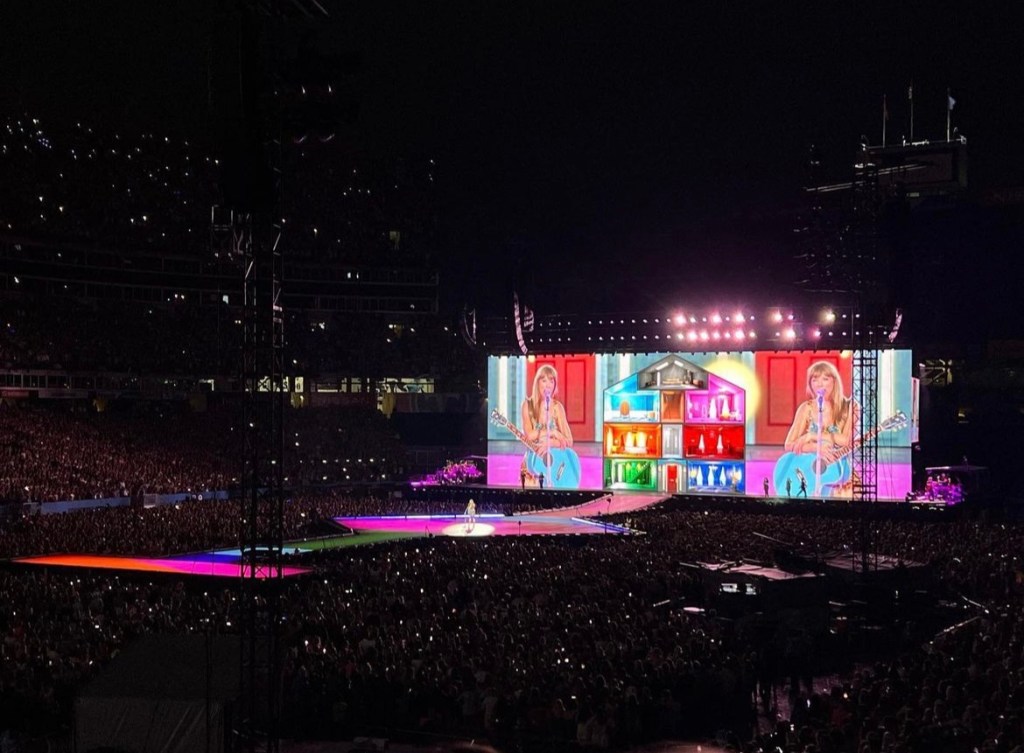
Two weeks later, pop sensation Taylor Swift performed in Nashville. The weekend ended on a high note after fans took shelter for hours during a thunderstorm delay, only to have Swift reemerge and perform her entire 3 ½ hour show in a driving rain for the 70,000 fans gathered at Nissan Stadium. Many concert goers remarked that the experience became even more memorable as the crowd joined together to sing the whole show despite the terrible weather conditions.

While these incidents concern fans and celebrity entertainers, we also leave an impression in each of life’s interactions.

We are not paid performers, but we are called to be intentional about the impact we leave with the people we encounter each day.

In the Sermon on the Mount (Mt 5-7), Jesus employs multiple images to talk about using our influence to draw others toward God.

In referencing light, Jesus declares that His followers are “the light of the world” (Mt 5:14).

We understand the attractive qualities of light. Physically and psychologically, we feel safer and more secure in a well-lit place. If we look into darkness, our eyes are immediately drawn to the points of light. A light in darkness even instinctually impacts insects and animals- whether a porch light or a full moon.

As believers, we are to point to God as the true light in Whom there is no darkness at all (1 John 1:5). We let our little lights shine to direct and draw people to Him as the source of light and life. Just as physical light is essential for our flourishing and thriving, sharing spiritual light is vital to faithfully following Jesus.

Jesus also paralleled the influence of a believer with being “the salt of the earth” (Mt 5:13).

Salt is a fascinating element in our world- needed in life, preserving in death, and impacting the flavor and nature of everything it touches. As any cook will tell you, even just “a pinch of salt” has a big impact on a dish. Salt is abundant, and yet precious. Until modern refrigeration, salting/curing was a primary method of preserving food. Through history, salt served as valuable currency and a staple of provisions.

It takes no culinary expertise to notice the absence of salt in a favorite meal, or conversely, the overuse of salt in our food. While salt is often a foundational ingredient, just a little bit makes a big difference.

The correlation of a Christ-like influence is apparent- even a small amount of love, grace, and compassion impacts the whole flavor of the lives it touches.

When we engage with others, do they feel warmed by the light and love of Christ or do they feel cold rejection at our indifference?

Do people taste the goodness of the Lord (Ps 34:8) in our words and actions, or do they leave our presence with a lingering bitter aftertaste from our scorn or judgment?

As has often been said, “People may forget what you said, but they will never forget how you made them feel.”  

We want the impression we leave to draw others closer to Christ.

Through our daily actions and attitudes, may we always strive to leave each person we encounter with a faithful impression of the Lord we claim to serve.

Making Our Mark

We live in a culture full of symbols- road signs, yard flags, car decals, corporate logos, and electronic billboards. These symbols do not tell the whole story, but they serve to market products, draw our attention, or declare our loyalties to the passing world.

We understand that such markings have meaning, and while we do not always agree on the interpretation of a certain symbol, we recognize that these visible marks serve as powerful reminders and signals to those who we encounter each day.

In this graduation season, one oft-repeated piece of advice for those receiving degrees is to go out from the classroom to make a difference in the world. “Leave your mark” is considered a fitting encouragement as we enter a new phase of life.

All of us long for significance, and we long to believe we offer something of value to the world. Teachers, salespeople, ministers, parents, celebrities- everyone wants to make a mark that will matter and endure in our rapidly changing world. Our motivations (such as profit/prestige/power/compassion) may differ widely, but the desire to make an impact is a reality.

As believers, we are leaving an impression of the world each day. Words matter- the symbols we embrace and words we offer impact our family, friends, neighbors, and even strangers for good or ill.

It is wise then to appreciate the truth that the words and actions that mark our lives affect the impressions we leave on others.

In Scripture, we read about the marking of people by the use of descriptions or nicknames. In Acts 4, we meet Barnabas whose actual name was Joseph- an extremely common name. Barnabas (meaning “son of encouragement”) was the nickname he received because he was always using his wealth, words, and relationships to build others up.

Brothers James and John were called Boaneges (meaning “sons of thunder”) seemingly related to their intense (though at times misguided) passion for God’s justice (Mk 3:17; Lk 9:54).

Besides Simon Peter (Peter itself serves as a symbolic nickname- Mt 16:17-18), Jesus called another Simon to his inner circle, “Simon called the Zealot” (Lk 6:15). This Simon was known for a life marked by his nationalism (at least in his background before following Jesus).

Is my life more marked by sharing encouragement, living with passion, or debating my politics? I am I marked as one who looks to see the good in those around me or as a person who would call down fire on my opponents if given the opportunity?

Paul writes to the church at Rome about the importance of recognizing and marking those who only seek to cause division (Rom 16:17). Their divisive activities were known and reputations well-deserved. Faithful Christians were to avoid being drawn into endless debates with such people- mark them as troublemakers and unless genuine change occurs, avoid becoming entangled in constant strife with them.

Many of us don’t mind marking those we dislike or disagree with, but Paul reminds the Philippian Christians to also mark those who walk as faithful examples to follow (Phil 3:17). If a person is walking the journey of faith well, we are to note and imitate the godly aspects of such a life (1 Cor 11:1).

Day by day, we are each making our mark on the world- what will your mark be?

As believers, may we be more intentional in realizing that no matter what else we may be, our primary role is to offer a faithful example of a life truly marked by the presence of Jesus.

Blessings of Life Together

“The person who loves their dream of community will destroy community, but the person who loves those around them will create community.”

Dietrich Bonhoeffer, Life Together

Being called to live in community is one of the great invitations of the Christian faith, yet living in community also produces some of the most challenging aspects of the Christian life.

Whether we like it or not, life in community is not an add-on feature to our already-complete, neatly-packaged personal holiness- the gospel does not call us to a life of spiritual individualism and social isolation, but to a communal pilgrimage through our collective brokenness and the messiness of shared experience.

Christianity is not a solitary religion- we are called to walk this life of faith together.

I believe one of the blessings of this community relationship we are called to share is that believers are entrusted with a common vocabulary. Words that seem idealistic or even corny in the “real world” hold deep and abiding significance for those seeking to faithfully follow Jesus.

Joy, mercy, sacrifice, and commitment can be experienced by all people, but the believer recognizes God as the source of these and seemingly countless other virtues.

Broader society may acknowledge grace, compassion, and love, but the disciple of Jesus knows more than the intellectual definition of these words- he or she knows the One who personifies of these concepts as the divine Source of everything good, right, and true.

In addition to giving us an experienced terminology for understanding of the virtues found in God, the Christian community provides us with a unique bond of fellowship.

Wherever Christians go in the world, they already have a spiritual family awaiting them.

Anywhere we find disciples of Jesus, we have the ability to share an immediate intimacy that serves as a comfort and blessing. Whether we come together on the mission field, in the chapel of the local funeral home, at our children’s summer camp, or in a passing incident of daily life, Christians have a bond that is able- when faithfully applied- to transcend the outward divisions of race, gender, economics, politics, or age. The ability to pray for each other, to comfort each other, and to worship together greatly shapes the Christian experience.

We are to be the gathering of the redeemed- existing across and above life’s many external barriers.

As the song states, we share, “a common love for each other, a common gift to the Savior, a common bond holding us to the Lord, a common strength when we’re weary, a common hope for tomorrow, a common joy in the truth of God’s word.”

As we consider the implications of the Christian experience, one of the foremost blessings that we share is a sense of a mutual destiny.

In a world where we are often lulled into the comfortable complacency of daily life, we are to remind each other that our ultimate reality and ultimate hope of victory are not tied exclusively to the here and now.

While neither ignoring nor excusing the ever-present need for greater compassion and justice in our troubled world, believers are called to look beyond today’s headlines to the glory that awaits us as children of God.

By looking toward our grace-fueled, glorified future, we are empowered to live faithfully as we seek to share Christ’s love today.

This certainty of the future should dictate how we live day by day- not with our heads in the clouds ignoring suffering and strife, but with our hands active in service seeking to share the glory we have already tasted in Jesus.

Our life together as disciples of Jesus is marked with manifold blessings- a common vocabulary, a shared fellowship, and a united hope of salvation that spans geography, time, and outward differences.

Through His grace, our Father offers these gifts to each of us if we have hearts willing to receive them.

People of the Second Chance

I finished an intense memoir by a woman who has struggled with many of the same mental health issues I have faced over the last two decades. One key difference in our stories is that, while she faced rejection from her family, bullying by so-called friends, and came to suffer from eating disorders, self-injury, and drug abuse, I received a stream of constant support.

Even though our medical charts might show a similar chemical starting point, our stories ultimately followed two extremely different paths. I know the intensity of my own pain even with so many advantages, and her candid story reminded me that each person we encounter is struggling with something- and often hiding it quite well for a long, painful time.

Every day we witness people making bad choices or falling into destructive patterns, and we are tempted to say, “They should know better.”

While taking personal responsibility for our actions is essential, we also need to appreciate the circumstances and conditions that have led others to where they find themselves. While accountability is vital, it is naïve to think that we all are starting our lives in the same place with all of the same advantages.

I realize all too well that it is a challenge to continue to offer grace to people who repeatedly make negative choices and break our trust, but I am so thankful for the many people in my own history who chose to give me those second and third chances. I am also grateful that I believe in a God whose active, life-giving grace provides me the ability to start over when I fall short.

While thankful for the day-to-day stability in this season of my life, I hope I never become so settled or so stable or so secure that I forget what it was like to need another chance. People were willing to give them to me when I didn’t deserve them, and I know that I too need to be an agent committed to sharing that same grace.

Each day we all encounter someone we can influence or encourage- someone who stands in need of another chance.

A kind word, a caring hug, or a thoughtful compliment can be such a catalyst in a person’s life. I pray we can all look to be that influence– the provider of the second chance.

Send that text. Mail that card. Make that call.

Understanding just what the person is facing is not possible nor is it really the point– we must simply realize that we don’t have to withhold our love from people until they get it all figured out.

In fact, we come to appreciate that it is in the act of loving people and extending another chance that they often realize the courage to hang on for another day and to begin moving forward.

  • I don’t have to fully understand to love you without condition.
  • I don’t have to fully understand to serve you without selfish motives.
  • I don’t have to fully understand to pray for better days to come.
  • I don’t have to fully understand to make sure you get home safely.
  • I don’t have to fully understand to sit up with you while you cry.
  • I don’t have to fully understand to realize we are all in this together.
  • I don’t have to fully understand to be willing to offer you a second chance.

Life is hard enough as it is, but it proves to be so much harder without support.

No one needs to face this life alone- especially when we each have the ability to make a difference.

May our eyes, ears, and hearts be open to opportunities; not to fix others, but to walk beside the hurting people in our lives and to extend to them the grace others have willingly given us. In seeking to lead with grace, we embrace the renewed life we have in Christ and are strengthened to share it with others.

Search Me, O God…

In our all-too-frequent moments of national crisis, religious leaders often declare that God’s people need to pray BIG prayers.

Prayers that will change our nation. Prayers that will revive our churches. Prayers that will halt gun violence and cure racism. We are told again and again that these are just the type of big, broad, and bold prayers that will bring our sin-sick society back to God.

While there is nothing wrong with offering such prayers for our hurting world, I believe the prayer with the most potential for lasting change is to ask God to truly show us the more personal challenges and compromises that so often rise up within our hearts and displace Him from His rightful place in our lives.

In Psalm 139:23-24, the inspired writer offers the words, “Search me, O God, and know my heart: try me, and know my thoughts: and see if there be any wicked way in me, and lead me in the way everlasting.” (KJV)

This prayer is both expansive and intimate, both personal and daring. In praying these words, we are not asking God to change the world in a instant or to overwhelm our lives with more material abundance- we are instead taking the difficult, yet necessary, step toward a closer walk with God by openly confessing our own limitations and admitting our vulnerability and frailties before His perfect holiness.

It is important to note what is being asked in this two-verse prayer.

When we ask God to search the heart, we are asking for one of the most intimate and intense experiences possible. We know from Scripture that the human heart without God’s presence is “deceitful about all things…desperately wicked” (Jer 17:9). In a world where evil is attributed to various combinations of environment, heredity, chance, social issues, and bad choices, believers realize that there is a spiritual component to the darkness in our world. Such darkness is not only abstractly thriving “out there” in repeated tragedies like mass shootings, ongoing heartaches like the opioid crisis, and broken social systems that promote racial/class/religious divisions, but this spiritual darkness is also present to some degree within each person who inevitably does wrong and sinful things each day.

When Paul says, “all have sinned and fallen short of the glory of God,” he truly means all of us (Rom 3:23).

When we consider the words of Psalm 139, it is essential to observe whose heart we desire God to search and expose. When my neighbor hurts me, I want to know why. When my spouse is unkind, I can dream up all sorts of reasons for the behavior. When someone cuts me off in traffic, I want him to see the error of his ways, yet the psalmist’s prayer is not focused on the hearts or actions of others.

“Search me” is an invitation for God’s eye to be trained upon my own thoughts and motivations.

Unless I am willing to acknowledge God’s right as my Creator and Sustainer to search me and to reveal my own character, I miss out a vital tool in my spiritual growth. People often say “God knows my heart,” and while that is certainly true, we need to also ask God to reveal the secrets and subtleties of our own hearts to us.

Only with such God-centered discernment can we ever see ourselves truly.

We cannot know ourselves without the faithful presence and perspective of God. When we fail to see ourselves truly, we inevitably yield to compromise and self-centeredness.  We become indulgent of our own faults and embittered toward the failings of others. Our own hearts are incapable of maintaining an honest perspective without the refining presence of God. When we allow God to truly search us, see us, and reveal our true nature to us, we will receive clarity and insight that may be hard to hear, but will serve to mature our faith.

With God’s vision, we are empowered to both admit our errors and allow ourselves a greater measure of grace.

The greatest treasures in the life of faith can only be revealed when we allow our greatest hurts to be healed by God’s love. And such healing demands both the awareness of our wrongs and the admission of our need.

Unless we open ourselves willingly to God’s refining judgment, we miss out the growth and gains that can come only from the ever-flowing provision of His grace.

God does know our hearts, and He longs to reveal them to us as well.

When this revelation of our own reality occurs and is acknowledged, genuine humility is experienced and genuine healing can begin.

A Prayer in Changing Seasons

You, O Lord, are good and do good.

You have prepared every good gift we experience in this life.

You have guided, sustained, and filled our lives with good things from the beginning of all creation until now.

Without Your humility in coming to us, we could never know You- much less dare to appeal to You in prayer, and yet You instruct to ask, to seek, and to knock.

Through Jesus, You have promised the answer, the revelation, the open door, and so we continue to lift our voices in gratitude and praise and petition before You.

Father, hear the prayer we offer this day.

We stand, Lord, on the brink of yet another new season- another time of change.

By Your Word and through our own experiences, we know that nothing stands still in this life.

In each season, we lack any certainty in ourselves, yet we crave greater clarity and constancy than our physical senses can provide.

Give us, Bringer of the seasons, the ability to acknowledge and accept the cycles of change that always accompany the passage of time.

Free us from the bitterness of hurt and anger and grief, and instead let us raise up grace, peace, and joy in our hearts- even if we are called to build upon the foundation of the hardships we all face in this life.

Strengthen our hands to be quick to the work You have called us to in this season of our lives.

Lift our eyes to see the opportunities that are present now, and encourage us to redeem the time we have been given to make the most of the gifts You have placed before us in this moment.

Grant us the ability to see the beauty of budding trees, opening flowers, and singing birds.

Help us, even in our finite limitations, to see Your hand and presence in the daily unfolding of our lives.

May the springing forth of new life in creation signal the resurrection and renewal within us and hasten the passing away of resentment and anger from our hearts.

Let our harshness cease and glad songs return after the long, bitter darkness of winter.

Draw us together again into the fellowship of the community, and in drawing us together, allow us to be more and more comforted in Your embrace.

Bless us with the perspective that time alone can bring, and grant us the grace to offer patience and compassion to those in our lives whose understandings lead them to different perspectives, positions, and points of view.

Allow us this greater grace, accompanied by genuine desire, that we might long to extend Your grace to others.

Help us to love one another deeply, for from such love, we will seek to heal offenses, help our neighbors, and continue to hope in Your unfailing goodness.

Let the old bitterness born of self and selfishness die away, so that our hearts might be prepared for renewed life in this season of new beginnings.

Hear our prayer and heal our hearts that we might seek to serve in Your name.

Through Christ, the Eternal Unchanging One, we pray, amen.

Our Good Father

Recently an older man recounted to me his experience of leaving a small town in West Tennessee in the early 1950s to seek an athletic scholarship at a junior college in the Mississippi Delta.

After a couple of weeks of intense two-a-day practices in the swampy July heat of a Mississippi summer, the young man decided he had seen enough. Without any money, he called his parents late one evening to tell them he would come home and go to work instead of attending college. He would leave the next morning- hitchhiking back to Tennessee, and they could expect him home in a couple of days. He told the coach and his prospective teammates of his plan before lying down for the night.

After a few hours of fitful sleep, he felt himself being roused from his bunk for what he assumed was the normal 5 AM practice.

“I told y’all, I made up my mind. I am not going to stay here. I am going to go home in the morning.”

This man’s eyes glisten even seven decades later as he recounts the moment:

The thing was it wasn’t the coach at all. It was Daddy. He said, “Come on now, son, and get up, we’ve come to take you home.He never said nothing about it one way or the other, but he must have gotten together the gas money, left right after I called, and drove all that way through the night to get me. He never made me sorry I went or that I didn’t stay. He actually never said anything about it again- he just came and got me and brought me home.


So often in life, we take on more than we can handle- sometimes things that are wrong in themselves, but perhaps just as often, we tackle right things at the wrong time. When we reach our breaking point, we often think all that awaits us is a lecture, a criticism, or an “I told you so.”

The people around us certainly do respond that way at times. It seems so easy to see the errors and missteps in others’ lives- even as it often is so difficult to recognize them in our own.

But our God is different.

He is a Good Father that extends grace to us when we cannot see the clear way home. We are the ones who prepare speeches, practice talking points, and seek to bargain our way back into favor- He is the one who runs to us and lavishly extends welcome and grace (Lk 15).

Like our Father, Jesus, our beloved elder Brother, doesn’t make us try to figure out how to hitchhike up to Him to heaven, but instead humbly comes to us and extends compassion and models a new, better way of living (Phil 2:5-11).

The Spirit and the Scriptures are living and active forces in our lives- lifting our words higher in prayer (Rom 8:26) and guiding our steps day by day as we journey through this life (Ps 119:105).

That homesick teenager graciously brought back home almost 70 years ago, married the sweet beauty queen from the rival high school, built a local business through honesty and hard work, raised two children, and eventually became my grandfather.

He never earned that college degree, but his four grandkids each did, and we went on to have multiple advanced degrees between us- in education, business, pharmacy, and ministry.

He taught us all more life lessons by his example than he ever could have with any amount of higher education- quizzing us on our multiplication prowess at the dinner table, refusing to let us win at a game of H-O-R-S-E, serving with integrity in public office in a small town for decades, and loving each of us just as we were in all the highs and lows of life.

I give thanks that my great-grandfather who I don’t remember drove through the night down to the Delta and to bring home a homesick boy who would grow into a man I will never forget. Because he showed up with love rather than a lecture, that single act of grace lives on, and an entire family exists and our individual stories are unfolding as lives that are committed to growing in grace.

Grace is like that- unearned, undeserved, and most often, unexpected.

In life, sometimes we all need some correction, but we always need more grace.

Grace begets grace, and when we offer grace to one other, we are growing to be more and more like our faithful Father.

No act of grace, however small it seems, is ever wasted in the Father’s will.


Last night, shedding his earthly tent battered by years of toil and broken by recent sickness, my grandfather took his final breath here, and passed into the presence of the great cloud of witnesses and embrace of our Good Father. Like a boat slipping into the water in the pre-dawn stillness of his beloved Kentucky Lake, he left us here and went on to his reward.

We grieve today, but by the grace of the same Good Father, we know some day we will be united in a better land where every sickness ceases, death divides no more, and all who are weary are at rest.

We are thankful that, while we sorrow now, it is a sorrow drenched in the promises of our Good Father and in the hope of better things to come (1 Thes 4:13-18).